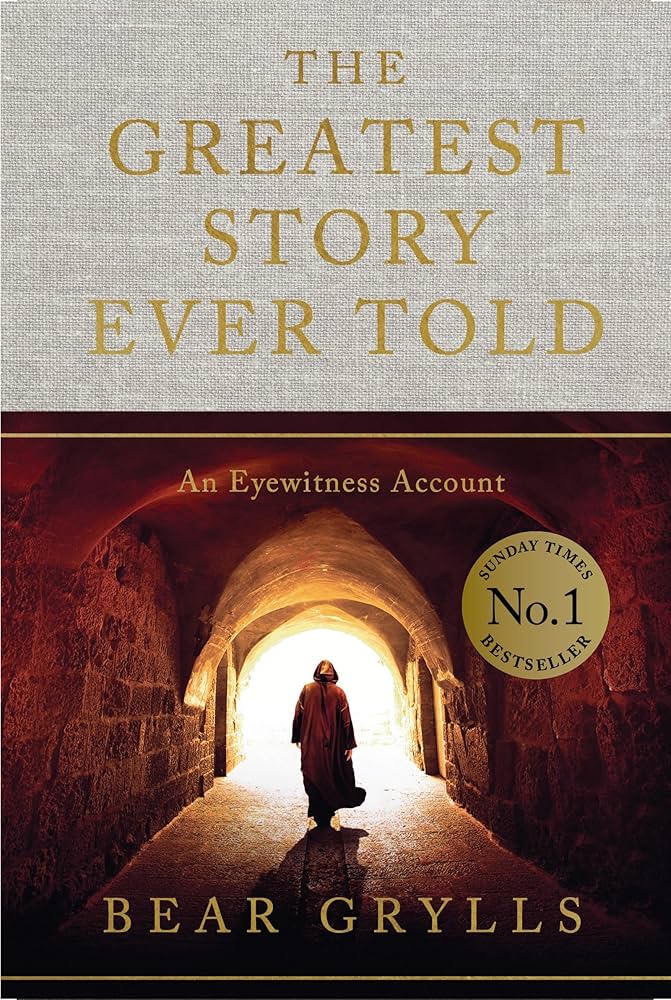
The premise of this book seems to be to tell the story of Jesus in one flowing narrative, so combining all four Gospels, and told from the viewpoint of five eye witnesses to His life: Mary (His mother), Thomas, Simon, John and Mary Magdalene.
I think I went into this with maybe a slightly more cynical outlook, looking for faults in the story as it were, as someone very familiar with the story. But for someone investigating Christianity but wanting something less intimidating than the Bible, I think this would be a great starting point.
I’m not sure there was much difference between the narratives other than His mother Mary’s, as that is necessary to tell the beginning of the story, from her becoming pregnant, through raising Him, to the wedding in Cana, at which point Thomas takes over the narration, but there didn’t seem to a reason that Simon couldn’t have done the rest of the book, I guess it was maybe broken down so as not to give one disciple huge prominence, but I didn’t feel much of a shift in style when the narrators switched.
Generally it’s very close to the Bible – every word spoken by Jesus specifically, is taken directly from scripture, and there isn’t much artistic licence used, as I guess the authenticity is important for a non Christian readership. But occasionally a weird thing was thrown in, like Jesus working for Joseph of Arimathea before He started His ministry…. that seemed an odd choice.
There was also the parable of the lost son, where the ending was just missed, where the older brother complains at the celebrations. To be honest, there’s a lot of His teaching that isn’t in there, I guess cos otherwise it’d have to be a much longer book. What is included of that, is often put in as a memory of “I remember when He told us…”, so definitely not all in order either, but it’s clear when it’s intentionally not. There are many miracles included though, my memory isn’t good enough to say if all!
A couple of times he added a tone to someone’s voice that I wasn’t sure how realistic it was, especially when he describes Pilate as sarcastic when he refer’s to Jesus as King of the Jews, but I would argue that there is nothing in the Bible to imply he didn’t mean that – quite the opposite in fact:
The chief priests of the Jews protested to Pilate, “Do not write ‘The King of the Jews,’ but that this man claimed to be king of the Jews.”
Pilate answered, “What I have written, I have written.”
– John 19 vv 21-22
Overall it was good; it tells the story in a very readable way. I think the above probably comes across as negative, because I am, by nature, a hole picker (just ask anyone I work with!), but don’t let that put you off.


 ineke.co.uk
Anything to add...?