
These days the author is known by her full first name of Shaparak, but I’ve just put Shappi in the title of the post as that’s still what’s printed on this book as it was published in 2009.
Shaparak was born in Iran in the 70s, and her dad was a satirist, which didn’t go down brilliantly with those in charge, hence them ending up in the UK. This autobiography covers that move and the adjustment to life in a foreign country as a child, as well as the problems back home where her extended family still are, and the fact that they might still not be fully safe even in London.
A lot of it is about adjusting to culture, at times the kids adjusting better than the parents and being embarrassed by them, and obviously the difficulty of being seen as different at school.
It’s heart-breaking in places, but told in a way that’s mostly light, just like she’s talking to you to tell her story.

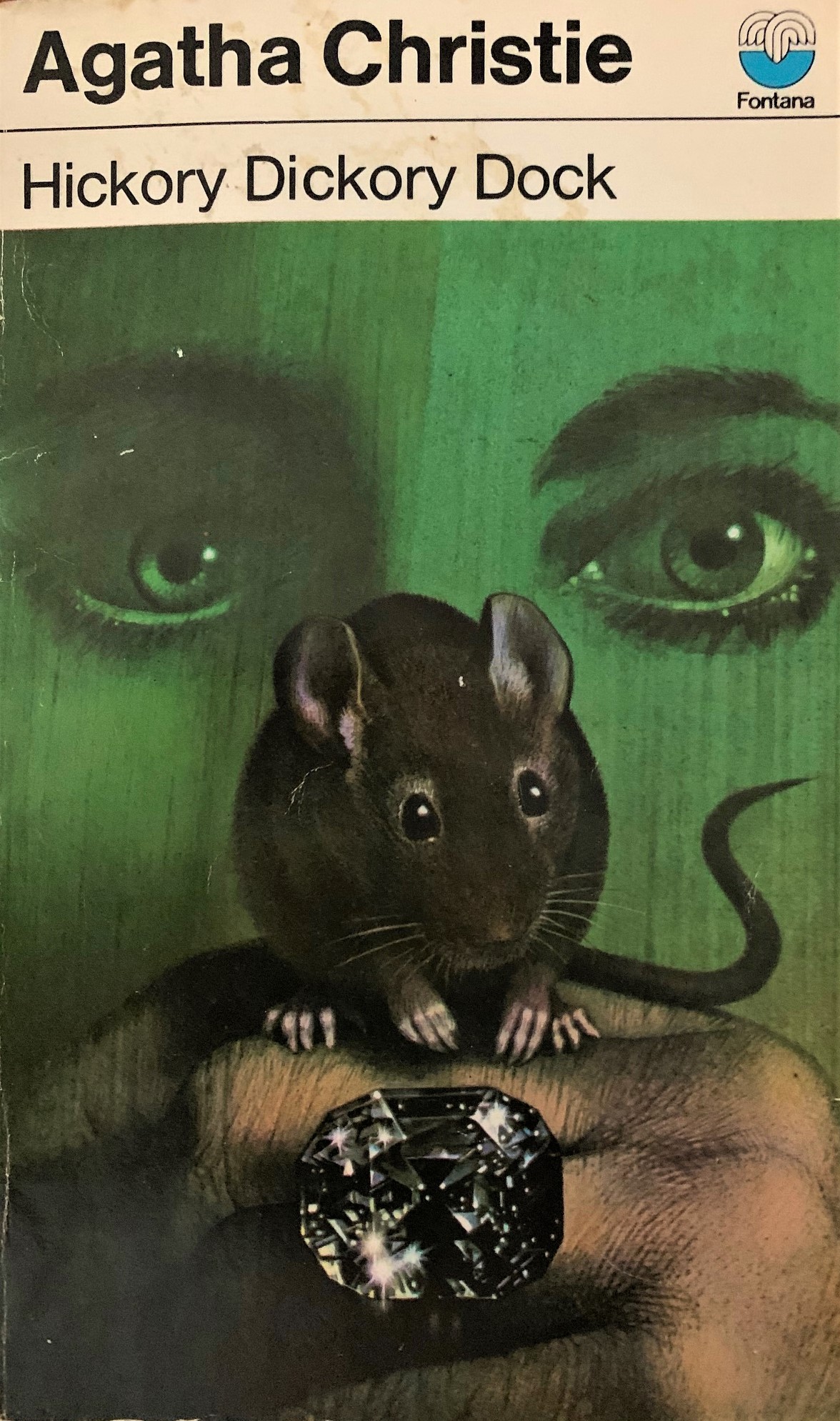
It was time for another Agatha Christie, and this was one I’d picked up in a charity shop last year, probably just because of the familiar title to be honest, though it had very little to do with the plot other than the name of the road the house is on from what I could tell!
The action takes place in a student hostel, I guess these days you’d refer to it as more of a house share but with a warden (it was published in 1955). Strange things have gone missing, some of value, some not at all. Poirot hears about this from his secretary, who is the warden’s sister, and is curious. The next thing you know, someone is dead, and there’s a lot more to investigate!
Ove is the sort of grumpy old person I dream of being! He lives in a fairly quiet neighbourhood where no cars are allowed in the residential area, one of many rules he is very keen to enforce – without rules there would be chaos everywhere.
He is a man of routine: every morning he does an inspection of the neighbourhood to check that nothing is amiss. He checks all areas including the bike shed, the bin store, and the parking area:
“He detoured through the guest parking area, where cars could only be left for up to twenty-four hours. Carefully he noted down all the registration numbers in the little pad he kept in his jacket pocket, and then compared these to the registrations he had noted down the day before. On occasions when the same registration numbers turned up in Ove’s notepad, Ove would go home and call the Vehicle Licensing Authority to retrieve the vehicle owner’s details, after which he’d call up the latter and inform him that he was a useless imbecile who couldn’t even read signs. Ove didn’t really care who was parked in the guest parking area, of course. But it was a question of principle. If it said twenty-four hours on the sign, that’s how long you were allowed to stay. What would it be like if everyone just parked wherever they liked? It would be chaos. There’d be cars everywhere.”
As we start the book, some new neighbours are moving in next door, and a stray cat is spending too much time around the area, neither scenario is something Ove is keen on.
Much more and I’ll be starting to spoil the premise, but hopefully this gives you a feel for him as a character, which for me was what made me keep picking up the book!
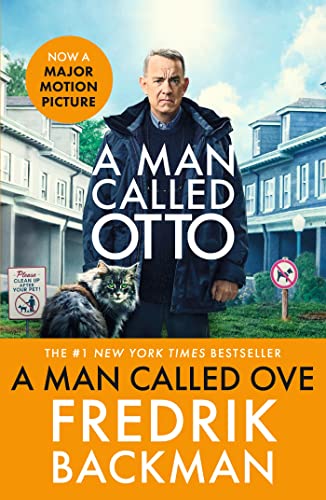
The only downside was a very stupid front cover which had the book name, and then above it the film poster where the titular character’s name has been changed for an American setting.