And Then There Were None – by Agatha Christie

23 02 2021

I recently read the following quote from Val McDermid: “Agatha Christie is the gateway drug to crime fiction”, and am finding this more and more so to be true! Having read Murder on the Orient Express last summer, I asked for another for Christmas – my brother got me this and it was excellent!

I don’t know if this true of all of her books, but in the two I’ve read, they’ve started by introducing a whole load of unrelated characters, and then starting to tell the story, this means they can take a while to get to grips with, but in this one I kept a couple of post-its in pages with info that was helpful to flick back to frequently, eg the character intros, why each of them had journeyed to this tiny island, and the rhyme that gives the structure of the story, “Ten little soldier boys” (although it’s had other names in the past, which have also been the title of the book, but have since been deemed less than PC).

But fairly soon, all of them were familiar, and I was hooked! I kept grabbing it to see who was going to be killed off next (it brings out a very dark side!) and if the people I thought might be responsible really were – completely addictive.

I will certainly be asking for another for my birthday!


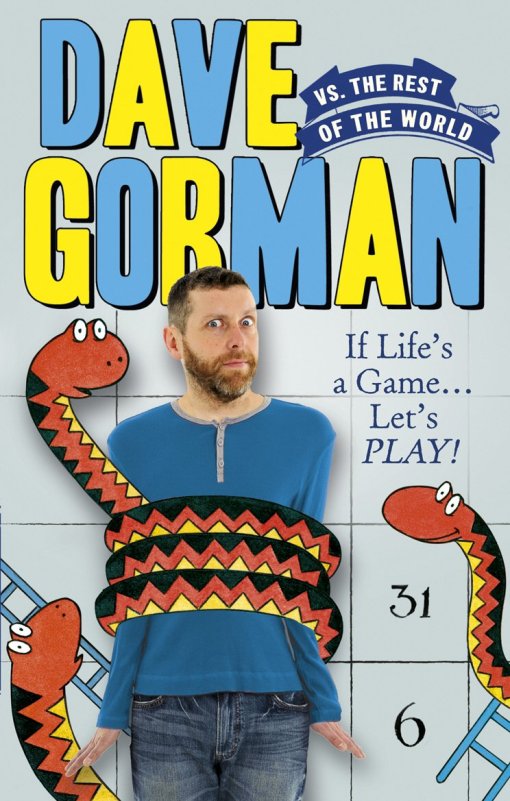
Dave Gorman vs The Rest Of The World – by Dave Gorman

11 02 2021

When I was putting together my Christmas list (I can hardly say “writing” my Christmas list when I was pulling links together!) I thought how there was only one Dave Gorman book I hadn’t read, and so it was about time I did!

It’s a very simple concept, one day Dave Gorman put a tweet out into the universe asking if anyone wanted to play a game (real life games, not video games). He got replies, and went to play games with those people! There’s a bit in the middle of the book where someone wants to work with him on this “project”, (he definitely has previous with “Googlewhack Adventure”, “Are you Dave Gorman”, and “America Unchained”) but he says no, it’s no project, just something he’s doing for fun in his time off…. He doesn’t explain how he got from there to publishing it in a book!

The games range from Ultimate Frisbee to an Egyptian laser chess game to Cluedo to a random Cornish skittles game. The book is just him talking about the experience, the places he went, the people he met, the games he played. And just with his eye for detail (enjoying the simplicity of Cribbage having 2 pegs for scoring so you never lose your place), and his gentle chatter, it’s a lovely book to read. He met some lovely people, and some complete weirdos (including people who play Monopoly with REAL money), both of which made for fun reading!

For most of the book he keeps a scoreboard of him vs the rest of the world, though it does seem to go missing for some of the middle of the book (And I’m not sure there was a final total)! And for the less common games he puts an explanation in a handy box so we know what’s going on. As a fan of structure, this was pretty pleasing.

As ever, some of my favourite quotes and observations from the book (the last one is the most beautiful):

  • “There’s something oddly energising about sparking a memory from nowhere like that. I don’t think it’s the memory itself that does it. I think it’s the excitement at discovering your brain is so much bigger than you realised.”
  • “At Stockport bus depot I stood and waited. There were maybe fifteen fellow travellers at the same bus stand, all eyeing each other up carefully. No queue had been formed but we’d all made a mental note of the order in which we’d arrived.”
  • “There’s an unhealthy part of my personality that tends to obsess and collect; that will take things to extremes. I can be a dog with a bone at times. But I didn’t want to let it happen again. Not with this. It wasn’t a treasure hunt. There wasn’t a prize for playing the most games in the shortest amount of time.”
  • “I feel naked if I’m not wearing a watch and yet, when I want to know the time, I sometimes find myself checking my phone first.”
  • “There are no referees in Ultimate. Ever. At any level. Messing around in the park? No ref. Playing a rival club? No ref. World Championship final? No ref. Players call their own fouls and have to settle their own disputes. If you’re going to play Ultimate, you just have to accept that paying the game fairly is more important than winning.”
  • “I would’nt describe Liskeard as a pretty place. It’s more prosaic than that. If you think of all the little villages around and about as gorgeous old vintage sports cars – high maintenance, impractical, but lovely for looking at – then Liskeard is the rusty but trusty family saloon. And while those vintage automobiles are all very well, when you want to do the shopping you know which car keys you pick up. (If you want to stick with this motoring analogy, it follows that Plymouth is, um … a transit van.”
  • “I have grown snobbish about the world world of ‘organised fun’. I suspect I’m not alone. Holiday camps? Karaoke? Guided coach trips? […] I instinctively recoil from such things but I don’t know why, because all empirical evidence suggests I’ll enjoy them.”
  • “When we throw our cynicism aside there’s so much more to enjoy.”


Queenie – by Candice Carty-Williams

9 11 2020

Another of the books I picked up over the summer from recommended reading around the Black Lives Matter movement. This book is fiction, which I find easier to read, so thought I’d give it a go. Queenie is a 25 year old of Jamaican descent living in London; she and her boyfriend are ‘on a break’ and she’s not taking it that well.

I guess it was a decent book, but I only gave it 3 stars on Goodreads. This was really because (more in the first half of the book), there are several sex scenes that were just a bit more detailed than they needed to be, particularly one that was violent. It really got me thinking about how books don’t have ratings in the same way DVDs do – seeing this book cover on the shelf, there’s no indication as to what age it would be suitable for. That part of it did calm down and then the book did cover mental health issues in a really helpful way, though again for some, reading it without a heads up could be difficult! I know on my friend Ceri’s BookTube channel she will always share content warnings, and I think this is such a helpful idea, but would be so much better if it was on book covers.

None of this makes it a bad book, I think the mental health stuff that was included was important, and even some of the stuff the character went through in the sex, but that aspect could have been done without being described as graphically as it was in places, that’s all.

Ultimately it’s giving you perspective of life of a young black woman in London, and some of the trials that come with that, that from a position of white privilege, we may never have even considered. I really enjoyed her relationship with her friends and family. It’s not primarily a mental health book, that’s just one element of it, but I was reading this after a (much more minor) blip, and so some of it really resonated, particularly the support she had around her.

I heard someone describe her as a bit of a Bridget Jones character, and I guess she does have some things in common with her, but it has a pretty different feel about it than that.

I will leave you, as I often do, with some of my favourite quotes (and yes they’re mostly mental health related, but just ‘cos they’re the bits that stood out to me!):

  • “So what if something is wrong with you? There’s something wrong with al of us.”
  • “I think that we all need to scrap this idea that normality is something to strive towards. I personally cannot pinpoint or prescribe what it is to be normal.”
  • “Thank you for being my friend, even though I didn’t make it easy.”
  • “As for the anxiety, and the head feeling weird and then the stomach following, even if you do go back to how things were, you made it out before, you’ll make it out again.”
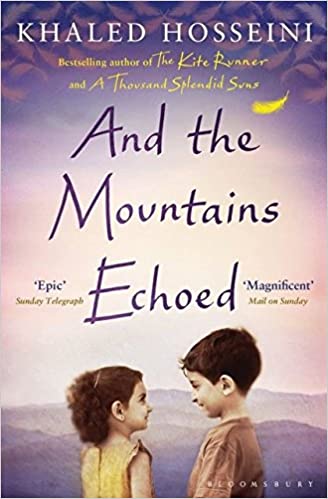
And The Mountains Echoed – by Khaled Hosseini

25 10 2020

I think I set my expectations too high for this book. Having just read The Kite Runner and A Thousand Splendid Suns and reading this as a follow up, I was expecting greatness, but I guess there’s a reason it didn’t end up on all the ‘books you must read’ type lists that the other two have. It probably wasn’t that bad at all, just comparatively!

The thing I found most odd about it was that the story alluded to in the blurb is over very quickly, and the book jumps through different people’s stories who have maybe been mentioned as an aside in a previous persons story, to the point that you get pretty far removed from the original but then sometimes it jumps back to one more central, but then goes off to someone else who was mentioned before. I just found that most of the time, I found that I just wanted it to get back to the point, and then the ending was relatively predictable from very near the beginning. There were some decent enough stories in it, it just didn’t felt like it flowed properly at all. It also varied throughout between present and past tense, and first and third person. All very odd.

I feel this has been very negative, but as with most books, there were still bits that would normally make me turn down the corners (but it was a library book so I had to settle for taking a photo on my phone!).

  • “When you have lived as long as I have, you find that cruelty and benevolence are but shades of the same colour.”
  • “She said there was comfort to be found in the permanence of mathematical truths, in the lack of arbitrariness and the absence of ambiguity. In knowing that the answers may be elusive, but they could be found.”
  • “In my experience, men who understand women as well as you seem to rarely want to have anything to do with them.”
  • “Beauty is an enormous, unmerited gift, given randomly, stupidly.”
  • “James Parkinson, George Huntington, Robert Graves, John Down. Now this Lou Gehrig fellow of mine. How did men come to monopolise disease names too?”
  • “I should have been more kind. That is something a person will never regret.”


Elizabeth Is Missing – by Emma Healey

22 09 2020

The final book in the stack from Mum!

Before I read this, I knew it was about a woman with dementia who was convinced her friend was missing. What I didn’t know was that she narrates the book.

I’ll be honest, I really struggled with the first few pages as I adjusted to it – it was almost upsetting to read stuff that is so familiar and close to home, from the perspective of the person who is confused. You can feel her deteriorating through the book, which is tough, but laced with humour as well.

Once I got used to the style though, it was an excellent book – the narrator suffering from dementia is such a clever idea. Maud switches between struggling to work out what’s currently going on (other than being sure that her friend Elizabeth is missing, there’s a note in her pocket that says so), and flashing back to when she was a child and her older sister went missing. Essentially it’s two stories being told in parallel, but one reliably, and one not.

I guess it’s really a mystery book, and that’s what had me hooked, trying to work out what’s happened in her past, and what on earth is going on in her present. It really was a good read, I read it in seven days, crazy fast for me!

It turns out that there’s an adaptation of it on iPlayer at the moment, so hoping to watch that this week, trailer below!


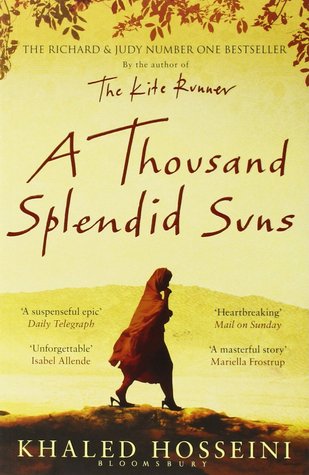
A Thousand Splendid Suns – by Khaled Hosseini

15 09 2020

Having really enjoyed The Kite Runner, I jumped straight on into this one, which while not a follow on story, is the next book Hosseini wrote, and is equally well spoken of.

Both books follow roughly the same time period of 1970s to the early 2000s, and are probably equally miserable, but while the two books are not technically linked, it’s very easy to contrast the two:

  • The Kite Runner really focused on the lives of boys and men in Kabul, the centre of this book was the female characters.
  • The Kite Runner covers escaping from Afghanistan and life outside it, but this mostly stays in the midst of it.
  • From a more technical perspective, The Kite Runner was told in the first person, but this is third person (and 50 pages before the end switches from past to present tense).

The first quarter of the book we meet Mariam who lives with her mother in a shack outside a town called Herat, and learn what brings her to Kabul and follow through her backstory. The second quarter we move on to Laila, who had a mention in Mariam’s story as the baby of a neighbour, but they haven’t really overlapped; again we hear her backstory up to the point where her and Mariam’s worlds collide. That brings us to the last half of the book, where we see their relationship and their struggles together.

Just like his first book, he manages to share a miserable story in a brilliant way which is so readable. It also feels really educational, I learnt a lot about the geography and history of the area. This book feels like you get more of the history than the previous one as most of the book stays in the country.

A couple of my favourite out-of-context quotes:

  • “Mariam set about cleaning up the mess, marvelling at how energetically lazy men could be.”
  • “Rasheed regarded the Taliban with a forgiving, affectionate kind of bemusement, as one might regard an erratic cousin prone to unpredictable acts of hilarity and scandal.”


The Kite Runner – by Khaled Hosseini

5 09 2020

The next book in the pile I borrowed from my mum is The Kite Runner, I picked it up because it’s always listed on those lists of “books to read before you die” etc, which normally means, it’s quite good!

I was warned before I read this that it’s not a cheerful book, both by friends who’ve read it, and by the quotes on the front cover: “devastating” and “heartbreaking” are pretty stark! And the warnings were right, it’s not happy, it’s a miserable book, but that doesn’t mean it’s not very good! In fact, partway through the book one of the characters says something which I think sums it up: “Sad stories make good books.”

The story follows Amir as he grows up in Afghanistan with his friend Hassan, through his escape to America when the country is invaded, and to when he has to one day return. At some points it just feels like a book of one awful thing after another, in fact, when I was 70 pages from the end I was on the phone to my mum and said how there was probably time for something else horrible to happen, and I wasn’t wrong!

But for those of you who are put off by this, I will reassure you that it does end on a hopeful note, and it was one of those books I just couldn’t wait to pick up again each time I wasn’t reading it. Normally at night I read a fall pages and can’t keep my eyes open, but one night I was reading this til 1am, definitely addictive!


The Chrysalids – by John Wyndham

24 08 2020

My mum cites this as her favourite book, so it was about time I gave it a read – she lent me her copy.

It was published in 1955, but these days would probably be put in the dystopian category that has become so popular. Living in a place called Labrador, it’s a fairly simple existence since Tribulation happened, but there is an idealism within society that if anyone or anything isn’t completely perfect (think extra finger, slightly misshapen crop of corn), then it is to be destroyed. There is a community on the Fringes of those who’ve been outcast, and further out than that, the badlands.

Our narrator, David, is a ten year old who has a mutation that isn’t visible, he can communicate with “thought shapes” with a handful of others who have the same ability. Because it isn’t visible, he hasn’t been shunned, but he knows it’s only a matter of time before they’re discovered.

I started the book unsure if it was a children’s book or grown ups, but it’s definitely a grown up book, it gets pretty dark!

The thing I don’t quite get, after reading the entire book, is why it’s called The Chrysalids… I googled and got some suggestions, but it doesn’t seem to make a lot of sense to me!

Oh, and one more thing, they don’t have the letter Z in their alphabet, but this is only mentioned a good way into the book, and the temptation to go back and reread and see if they used any words using the letter Z before that was huge, but I’m a slow reader so decided against it!


The Good Immigrant – edited by Nikesh Shukla

9 08 2020

Never in my life did I think I’d choose to read an essay collection; but when the focus/intention is something so important, the tone is relatively auto-biographical, and the reviews are so strong, it seemed worth giving it a go.

I think what surprised me most about this book (though of course it shouldn’t have) was the variety. As “21 writers explore what it means to be black, Asian & minority ethnic in Britain today”, not once did I think it was getting repetitive. The contributors are from all sorts of backgrounds, cultures, ethnicities [which, interestingly, spell-check doesn’t recognise as a word?!]. Some are UK born, some immigrated, and they talk about different things, some more on a specific topic, some more just telling their story. It gives a great insight into a world that those of us with white privilege just haven’t experienced.

At the start of the book there is a mini-bio for each author (and their twitter handle), but then it just dives right in, the first essay being from Shukla, and going on from there.

To give a flavour of what sort of things the book covers, I’ve put some example paragraphs and sentences below:

  • “A comedian, Kumail Nanjiani, an avid gamer, once expressed his delight that the Call of Duty series finally set a level in Karachi,[…] He was appalled, on playing the game, to see that the street signs were in Arabic. Not Urdu. He talks about the effort put into making each follicle on each soldier’s head stand out, into making their boot laces bounce as they ran, the millions spent developing this game, and how at no point did anyone decide to Google the language of Pakistan.” – Nikesh Shukla
  • “There was one thing I’d never considered about mixing red and yellow: a drop of yellow into red paint won’t do much to change the colour, but one drop of red into yellow and the whole pot is tainted forever.” – Varaidzo
  • “When we talk about race, the words ‘black’ and ‘white’ are familiar. ‘Brown’ too has come into play. I use the word ‘yellow’, offensive as many find it, because this is how I believe I’m seen.” – Vera Chok
  • “There was a point in the past when I stopped dressing ‘prettily’ because when I was out with ANY white man, no matter his age or looks, I was talke over and looked down on. It was assumed that I was his escort or mail-order bride.” – Vera Chok
  • “It transpires that my family were the unwitting pioneers of multiculturalism in St Neots – as far as Dad can recall, they were the only South Asian family in their immediate area, perhaps even the whole town. I assumed that Dad and his family must have felt ostracised. I was wrong: Dad can’t recall ever feeling that way. Whereas the segregated immigrant communities in the big cities were bearing the brunt of xenophobia, no one in St Neots seemed to have any problem with my family joining their community.” – Himesh Patel
  • “The only thing worse than racism is inaccurate racism.” – Nish Kumar
  • [Referring to teaching a class of year 2 children about writing stories] “When it came to sharing their stories, I noticed only one boy had acted upon my suggestion, naming his main character after his uncle. He had recently arrived from Nigeria and was eager to read his story to the class. However, when he read out the protagonist’s name, another boy, who was born in Britain and identified as Congolese, interrupted him. ‘You cant say that!’ he said. ‘Stories have to be about white people.'” – Darren Chetty
  • “It is interesting that the classifying seems to be done y those with lighter pigmentation.” – Sabrina Mahfouz
  • “What the comment made by the young women highlights again is this problematic assumption of an individual’s heritage based purely on an aesthetic they appear to fulfil.” – Sabrina Mahfouz
  • “Portrayals of ethnic minorities worked in stages, I realised, so I’d have to strap in for a long ride.
    1. Stage One is the two-dimensional stereotype – the minicab driver/terrorist/cornershop owner. It tightens the Necklace.
    2. Stage Two is the subversive portrayal, taking place on ‘ethnic’ terrain but aiming to challenge stereotypes. It loosens the Necklace.
    3. Stage Three is the Promised Land, where you play a character whose story is not intrinsically linked to his race. In the Promised Land I’m not a terror suspect, nor a victim of forced marriage. In the Promised Land, my name might even be Dave. In the Promised Land, there is no Necklace.”

    – Riz Ahmed

  • “My ‘random selection’ flying to LA was so reliable that as I started travelling more, I went through a six-month stretch of being search by the same middle-aged Sikh guy. […] I’ve had my films quoted back at me by someone rifling through my underpants, and been asked for selfies by someone swabbing me for explosives.” – Riz Ahmed
  • “The racism practised by white British people extends to all, not just those of a lower caste. Racial discrimination does not distinguish between Dalits and Brahmins; to racists, all Indians are the same.” – Sarah Sahim
  • “From India to Africa, the Caribbean, all over the world, skin bleaching is big business and the shade of your skin is your freedom or your prison. […] Britain, where white people dye themselves as brown as tea stains. […] Wherever you live, wherever you are from, it seems it is all about shade.” – Salena Godden

There’s also sections on: Visiting ones country of heritage and not fitting in their either, stereotypes of different African countries inspired by the hashtag #IfAfricaWasABar, and much else besides.

Definitely a good book for exposing us to what life is really like out there.


How to be Champion – by Sarah Millican

21 07 2020

Needed a bit of light relief after my last read! I think I picked this up in The Works for a couple of quid forever ago, and over lockdown she’s been reading through it on her instagram for folk, and I thought I may as well get it read!

The subtitle for the book says it’s an autobiography, but in reality, it’s somewhere halfway between that and a self-help book. Nice short bite size chapters about all sorts of things from her life (chapters range from “Things I’ve been bullied for”, to “My favourite room in the house”, and everything inbetween), the majority ending with “how to be champion” tips. As you’d expect from a comedian, it’s a funny book, but she’s also done amazing work including #joinin and Standard Issue.

Some of my favourite quotes are below:

  • “People who wear glasses are all potential superheroes.”
  • “I have always believed in grassing people up, or as I call it ‘calling people out on bad behaviour.'”
  • “When I was about twelve I asked my parents how old I had to be before I could have a boyfriend. I wasn’t super keen but I like to know the rules so I don’t break them.”
  • “There’s no social mobility at school; if you’re a dowdy nerd, you’re a dowdy nerd for five years.”
  • “There’s nothing worse than an accurate insult.”
  • “The way I see it, I get my car checked regularly, why wouldn’t I do the same for my brain?”
  • “But art in all its forms is subjective. Comedian Chris Addison once said that people are too afraid to say something is not their cup of tea.”
  • “Plus how wonderful it is when seeds you’ve planted start to grow. My friend Juliet said it’s like the slowest-ever firework display.”