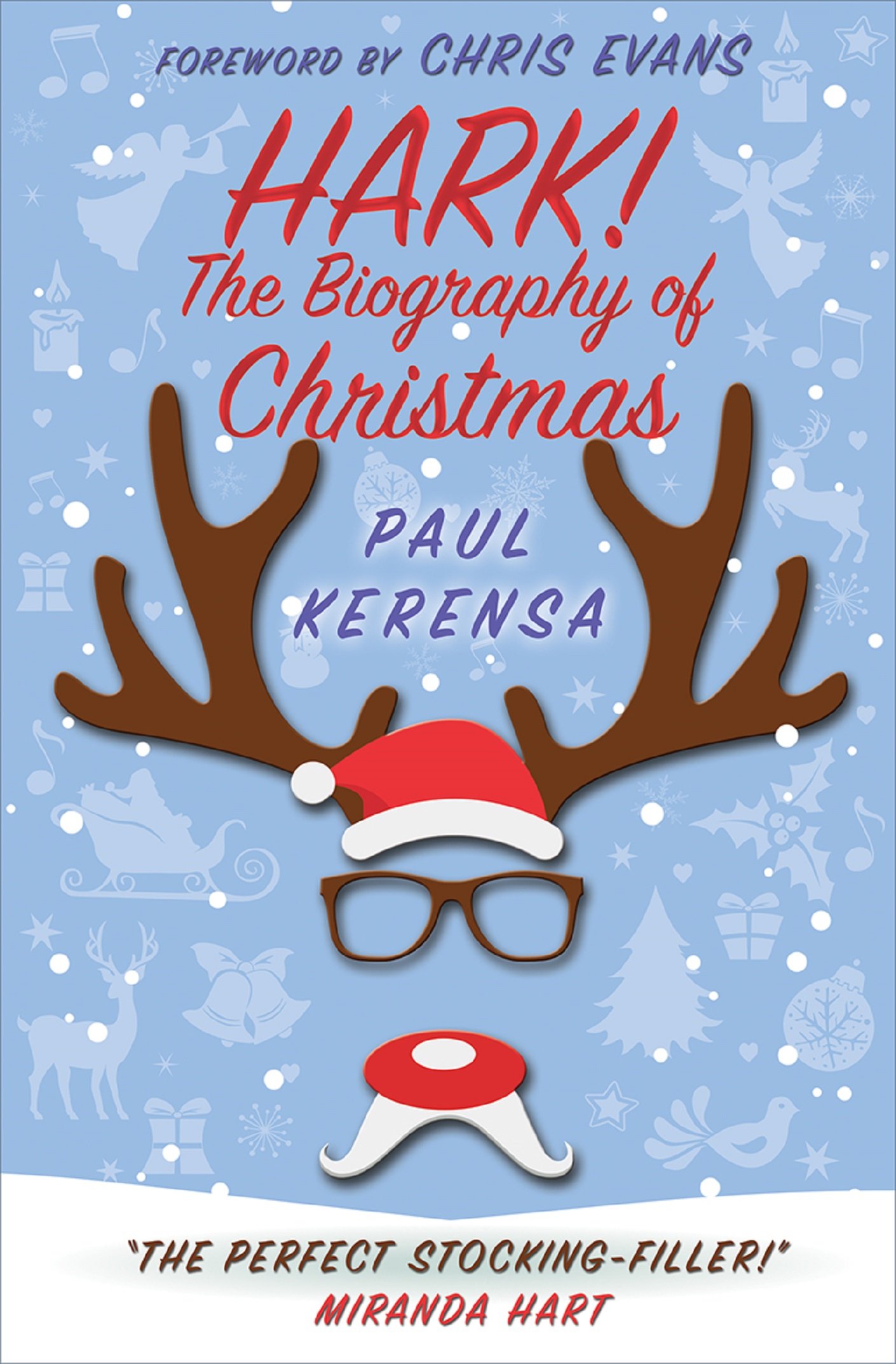
Hark! The Biography of Christmas – by Paul Kerensa

13 01 2026

I love a good Christmas book, and this was absolutely brilliant. It’s a full blown history of Christmas, from even before its origins, through to more recent traditions and I think literally everything in between! And yes, I know we’re well into January now, but I started this at the end of last year, so it’s ok!

Paul Kerensa is a comedy writer (he’s written on Miranda and Not Going Out), comic, media history enthusiast (he did a whole thing for 100 years of the BBC the other year and has really old copies of the Radio Times), and he’s a Christian (I think he sometimes does Pause for Thought on Radio 2). So he comes at this with all sorts of knowledge, but it feels really well researched on top of that, as well as being easy to read in his light-hearted style.

Here are some of the things I learnt

  • The immaculate conception refers to Mary’s birth, not Jesus’.
  • The 12 days of Christmas comes from a compromise between the Western church celebrating on 25th December, and the Eastern church on 6th January.
  • Good King Wenceslas was only made a king after he died – when he was alive he was a duke.
  • Christmas pies were rectangular (to look like a crib) meat pies. When Christmas was cancelled in the 1600s, people made them round and put mincemeat in to get around the ban.
  • Joy to the World was written about Jesus’ return, not His birth.
  • Knickers, Knickerbocker Glories, and the New York Knicks all trace their names back to a pseudonym used by Washington Irving who popularised the idea of St Nick in America.
  • Originally there were key differences between Father Christmas and Santa Claus:
    “Santa brings presents; Father Christmas just brings winter. The American version is child-friendly; the English version less so. Mr Claus wears a two-part suit and hat with white bobble; Mr Christmas wears a long one-piece habit with a hood. To this day the only major difference in appearance is in the subtlety of their headwear – hat versus hood is a handy way to spot an American Santa from an English Father Christmas.”
  • Dicken’s A Christmas Carol, Christmas Cards, and the carol “O Come All Ye Faithful” all appeared within a week of each other in December 1843.
  • Boxing day used to be the first weekday after Christmas. (And yes, that’s when we’d get a bank holiday now, but we don’t call that day Boxing day).
  • When a drawing of Victoria & Albert and their children admiring their 15ft Christmas tree was published in the USA, they removed Victoria’s crown and Albert’s moustache.
  • Dickens was in love with Queen Victoria:
    “On the royal wedding night at Windsor Castle in 1840, the already-married Dickens protested beneath the newlyweds’ bedroom window by rolling around in the mud.”
  • The original Miracle on 34th Street film was released in cinemas in May.
  • Star Wars did a Christmas special in 1978. It seems there’s a reason we haven’t heard about it….

I don’t normally enjoy history, but this was just fantastic, highly recommended if you are interested in where our modern day Christmas with all its quirks comes from.
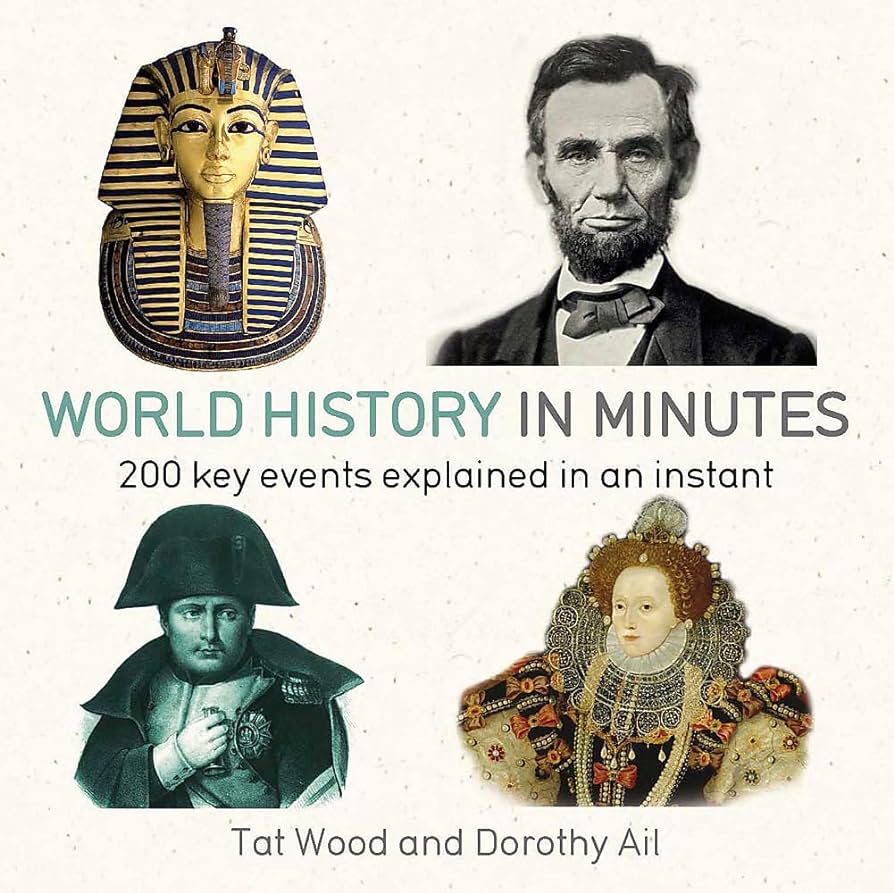
World History in Minutes – by Tat Wood and Dorothy Ail

6 12 2023

I picked this up as a way to give myself a quick overview of lots of things I didn’t know. I didn’t like history at school (with a couple of exceptions for the Tudors and Victorians), but thought it would be good to give myself a basic education.

I don’t think this book was the right choice. A lot of the pages seemed to have a load of assumed knowledge on people/places/scenarios, so I didn’t have a clue what they were on about, there wasn’t enough explanation. It also had a large number of typos that a basic spell check would have picked up on, which made me question the quality of what I was reading too. Most pages had an illustration, be it photo, diagram, painting, but they were all in black and white, so when it was a map with a key, it was very hard to distinguish between various shades of grey.

It starts with pre-history and goes right through to the 2008 credit crunch. I particularly struggled with the early stuff, cos I found that I just didn’t care enough, which meant I had a negative attitude through most of the book, and combined with the quality issues mentioned above, I’m just very relieved to have got to the end and ticked it off – it took me a month! Not a book I’ll be keeping.


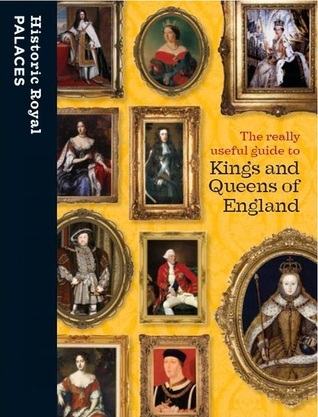
The really useful guide to Kings and Queens of England – by Historic Royal Palaces

7 11 2023

I bought this book a few years ago I think, when I visited Hampton Court Palace, and thought it’d be interesting, but only just got around to reading it. Each king or queen has a double page spread with a picture or two, a quick fact file, “what kind of ruler?”, palace connections (because it’s published by Historic Royal Palaces (HRP)), and then some more wordy bits of info to give you an idea of their key points.

It was mostly good, definitely a decent way to get a general overview, or quickly look up someone specific. Just a couple of things bothered me:

Firstly, in my reading I found 2 typos and a sentence that had been written really clumsily, it just felt like it could have done with one more proof read.

Secondly, while this edition was published in 2016, and so obviously one monarch out of date, it refers early on to male succession without acknowledging that that law changed in 2013 and so is no longer the case (but does talk about Richard III being discovered in a car park that year, so the text has definitely been updated since then!).

The other thing that was a bit odd (but understandable) was the focus on their links with Kensington, the Tower of London, Hampton Court, and the couple of other properties under HRP, with links to other palaces (eg Buckingham Palace, Windsor Castle) practically ignored, just a bit of a heavy weighting.

That all said, for me, as someone who really struggled with history at school, but would like to know a bit more now, this was pitched just right. Some high level details, enough basics for what you might want to know without being a heavy read. Bingo.


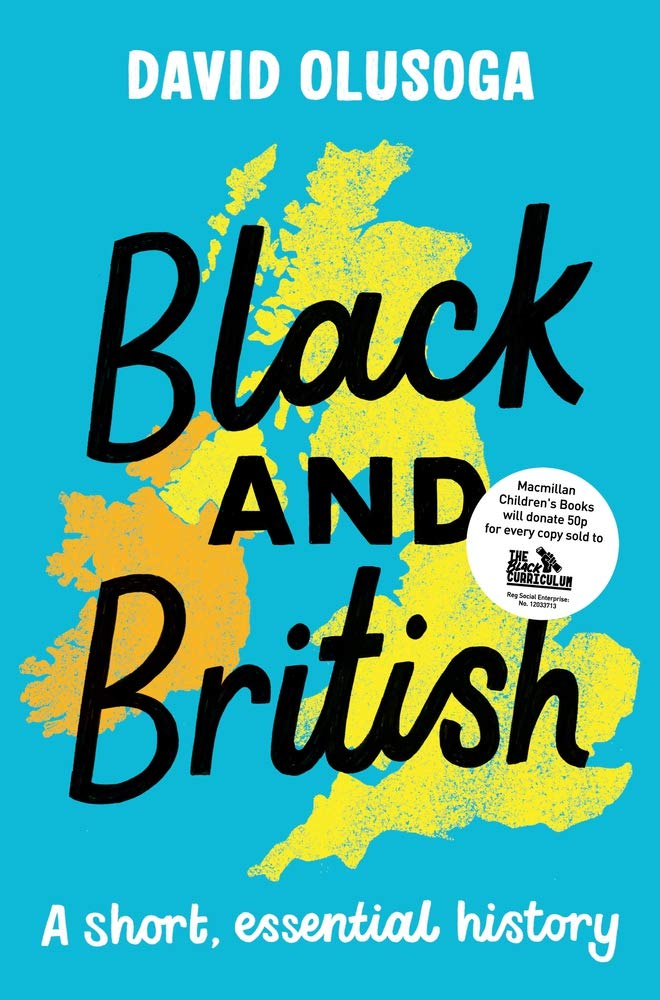
Black and British: A short, essential history – by David Olusoga

28 09 2022

There is a version of this book which is over 600 pages, and goes into a lot more detail, but as someone who struggled with history at school and is very slow to read non fiction I would never consider even trying to read it. So I was delighted to find that there was a children’s version of the book that would cover it more at my level – the words are more spaced out too!

It covers black British history as far back as the Romans, then jumping forward to the Tudors and working through from there to the 20th Century. It’s a great resource covering so much that we weren’t taught in school, or in other ways we learn about our country.

One of the things that stood out to me the most was that the celebrated abolition of the slave trade in 1807 was not the end of slavery; it was only the trade that became illegal at that point, but it can tend to be talked about it like everything was done at that point.

The book is also full of illustrations and images to help follow what’s going on. It’s a really accessible book, and so if like me, history isn’t your thing, this is a non-scary way of learning a bit more. I think I’ll need to read it a couple more times over the years for a refresh, but it’s not difficult to read!


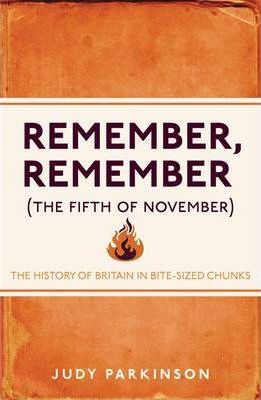
Remember, Remember (The fifth of November) – by Judy Parkinson

11 09 2017

I hated history at school, I liked the Victorians and Tudors, probably because of their pretty dresses, but the Romans never stuck, nor did much else.

This is my sort of history book. No article in it is more than 250 words. It opens with a timeline and a list of monarchs, and then from the Roman Invasion around 2000 years ago, up until the end of the Second World War, each significant historical item has one page, and one page only to be explained. It was so easy to read, you could binge or just read a page or two depending what time you had. Bite-sized; perfect.

I’ve had this on my shelf for a while and occasionally used it for reference, but it was great to just read it through over a couple of days (especially having just read some historical fiction and seeing how much of that came up) and get a good overview of the history of my country!