Birdsong – by Sebastian Faulks

11 03 2015

I could list an awful lot of thinks I didn’t like about this book.

  • I didn’t like the fact there was a very graphic, “intimate” scene quite early on in the book when I thought it was going to be about life in the trenches.
  • I didn’t like how it had so many characters that it was hard to keep track at times
  • I didn’t like how it occasionally jumped forward to the 1970s to a slightly related but quite separate plot. I was looking to learn about the war, not some random ladies life and problems in the 70s!
  • I didn’t like where the book ended, it felt weak, and didn’t end in the section/era/characters I expected or wanted it to.

…and yet, I really did enjoy this book. There was, once you’d got your head around the different sections, a thread running through the whole thing, and I got what felt like a much better idea of how horrific life was for soldiers, and also miners, in the trenches in the first world war. It definitely brought through to the front the reality of it all.

I initially bought this book because of the centenary of the first world war, and hoped to learn a lot. It wasn’t what I expected, but I did, on the whole, enjoy it!
birdsong


Narnia: Unlocking the Wardrobe – by Paul A Karkainen

31 12 2014

As a non-fiction book, this has taken me a bit longer to read – I reckon about seven weeks. I always find they contain so much more information that it takes me longer to digest it!

I’m a devoted Narnia and C.S. Lewis fan. As a child I listened to the BBC audio books every night as I went to sleep and probably got close to word-perfect at one point. I have a whole stack of his signature classics upstairs too, I’ve only read one so far, but aim to do another soon! And last month I watched “Shadowlands” which is a film based on a portion of his life (of which you can see the horribly American trailer)

This book basically takes each Narnian book, and looks at the Christian symbolism and application in it. Some of this is obvious and we pick it up without needing to be told – e.g. Creation, and Aslan’s sacrifice on the stone table. But there’s a lot more to be pulled out from it. We see things like the idea that the Calormene folk may be like those who follow Islam, the conversion stories that are told through various books (Edmund, Trumpkin, Eustace and Jill to name a few), and all sorts.

You probably want to have read each Narnia book before reading the associated chapter in this book as it does assume knowledge, but then, I don’t think you’d find it interesting unless you’d read them anyway! It’s definitely in the form of a commentary.

As I went, I turned down some of the corners of pages I found interesting, and so a few lines from this are below:

  • “Lewis avoided using sustained allegory in his writings. […] the Narnia chronicles contain a mixture of symbolism and passages that are pure fantasy, without profound meaning.”
  • He likens each of the children in The Lion, The Witch and The Wardrobe to one of the disciples. He gives them at least a paragraph each, but here are the headlines:
    • “Peter deserves the role of the apostle Paul. […] the leader of the Gentile church”
    • “Lucy is much like John, the disciple whom Jesus loved.”
    • “Edmund is a bit harder to categorize. For a long time he seems to be Judas, […] But he does come around in the end, rather in the fashion of the apostle Peter [who] makes every mistake in the book.”
    • “Susan does not really show her true colours in this book.”
  • “Bree [The Horse and His Boy] is the perfect picture of a reluctant convert, as he heads toward Narnia. Even though he has had his meeting with Aslan, he still wants to wait in Archenland until his tail grows, and he is still concerned whether Narnian horses roll.”
  • “When they left Narnia at the end of the Golden Age, they were maturing into real kings and queens. But when they returned to this world, they became children again. Living in Narnia represents living in the Spirit, and living in this world represents living in the flesh, because the children have not yet discovered the earthly equivalent of Aslan.”
  • “Wickedness is known by its fruits, just as righteousness is”
  • “Civilisation by itself is no substitute for righteosness. Some of the world’s most advanced nations have caused some of the most horrible carnage. Some of the most congenial and intellectual people around the world have espoused some of the most wrongheaded, perverted, and destructive philosophies.”
  • “In every age Satan has a different plan for enslaving man. He might use mystery religions, as he did at the time of Christ. Or he might use the Inquisition, as he did during the Middle Ages. Or he might rely on witchcraft, as he did in Elizabethan England. Or he might turn to dictators like Hitler and Mussolini. Bus his intention is always the same. He means to trick, betray, bind, and kill mankind.”
  • “A true servant of God does not make much of himself – he makes much of the God he serves. True devotion brings humility, not pride.”
  • “Satan knows that a fake Christian is an even more powerful tool in his hands than a strong atheist.”
  • “But Shift [The Last Battle] finally becomes the victim of his own deceit. In blinding himself to the reality of Aslan, he has also deceived himself into thinking there is no Tash. He has cut himself off from Aslan’s protection and becomes fair game for Tash’s claws.”
  • “People’s minds, as well as their bodies, will be made flawless in heaven.”
  • There’s also an interesting bit about Emeth who worshipped Tash but only did good things in his name and ended up being accepted by Aslan, but that’s too long to quote here – you’ll have to read it for yourselves!

narnia unlocking the wardrobe


Christmas with Billy & Me – by Giovanna Fletcher

26 12 2014

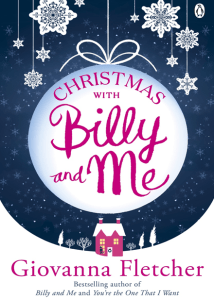
I’m currently partway through another book, but I got this “Novella” for Christmas (a follow-up to Giovanna’s first novel, Billy & Me), and at only about 50 pages, I read it on the day – it was the perfect length to read while the family watched Doctor Who.

It was a lovely little heart-warming read. We meet the characters a few months on from the end of the original book, and just go through December in the little town. There is a mysterious note that comes to the bakery asking for assistance with a Christmas Eve proposal, but who is it from?

Cute and uplifting – just delightful!

Christmas With Billy & Me


The Year I Met You – by Cecelia Ahern

13 11 2014

I don’t think I’ve ever read a book written in the second person before! I’d thought a while ago how books are always written in the first or third person, but never second – that is not the case.

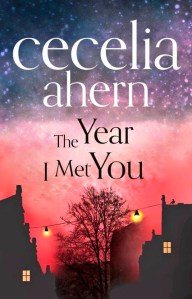
Jasmine has just lost her job, and her neighbour over the road has just had his wife leave him. He works on the radio and is generally very offensive – Jasmine hates him for something he once said about people with Downs Syndrome, which her sister has, and this book is written as if she is speaking to him.

We follow her year of gardening leave, working out what to do with her time, figuring out what to do at the end of it when she’s allowed to work again, a headhunter called Monday, her relationship with her neighbours who she never really knew before, and her relationship with her sister.

Feel good as Cecelia Ahern’s books always are, this is definitely another one.

I actually got this book much earlier than expected, I normally get the new Cecelia Ahern books when they come out in paperback, and this isn’t due until next summer. But last month I was in an airport, and exclusively they sell books in paperback that are only hardback in shops – expensive, yes, and still bulky in size, but it was very exciting to get it so early. Just means a long long wait for the next one now!

the year i met you


Northanger Abbey – by Val McDermid

24 10 2014

This book was my first venture into The Austen Project, where 6 current authors have been tasked with updating Jane Austen’s most famous novels. This is actually the second part of the project, with Sense and Sensibility being published by Joanne Trollope first, but this is just the one I grabbed in the supermarket to read!

I’m a great fan of Austen, but in all honesty, I’ve only read two of her books: Pride and Prejudice and Sense and Sensibility. The rest are on my bookshelf and to-read list! But I’ve seen TV and/or film adaptations of them all, and love the stories that she writes.

The premise of the original is a girl who loves Gothic fiction and gets this a bit twisted with reality, being invited to join family friends in Bath for the season, and then making friends with people who live in Northanger Abbey, which sounds like something out of one of her books…. and I won’t spoil it with further details.

But that’s Austen, and this is someone else! For the most part I really enjoyed this book. In this edition, we have a home schooled girl who is into vampire novels, and her neighbours offer to take her to the Edinburgh Festival, and the plot follows similarly, we end up visiting Northanger Abbey and wondering what secrets lie within.

I think on the whole the updating of the book worked really well (although, as with any of these re-writes, it wouldn’t be anything without the story it was based on of course). That said, some bits really irritated me. There was a little too much mention of facebook, twitter, phone apps, and trying to get on the WiFi. Yes, this is a modern book, but it was a little too frequent and distracted from what was going on. Similarly some references to the Twilight series, which I worry might not be long term enough to last in this.

But what really bothered me, was references to other Jane Austen books she’d read. I think that if you’re going to write a Jane Austen based novel, you should probably assume the characters don’t know about the other ones – it’s not like the original novels references each other! Maybe I’m just being picky, but it bothered me when this happened!

northanger abbey


Animal Farm – by George Orwell

8 10 2014

I never realised how short some of these ‘classics’ are! I am more than willing to work through a load of them at that length! Actually finished this a couple of days ago, but life’s been a bit too hectic to sit down and write it up…

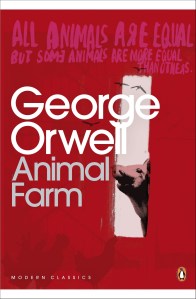
This book actually made me really angry. It just represents a totally unjust society, where the leaders tell the people things are brilliant and that they’re all equal, when really, it couldn’t be more uneven. As the cover of the book says: “All animals are equal, but some are more equal than others.”

Sadly it really reminded me of the state of some countries in our world in this present day, I think that’s where my anger really came from. This isn’t just fiction, it’s a reality for so many.

The story is well told though, and the animal parts make it light enough that you don’t completely want to cry, but it just makes some excellent points while it does that.

animal farm


An Abundance of Katherines – by John Green

29 09 2014

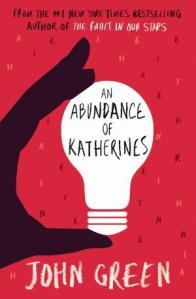
Colin is 18 years old, and has just been dumped by Katherine IXX (yes that’s right, his 19th girlfriend called Katherine). There’s definitely a couple of parallels between this and The Rosie Project which I read recently – the lead character is a remarkably intelligent man, who struggles a little socially, and tries to find a way to formulate relationships. In the Rosie Project, this was by matching a vast amount of criteria. In this book, Colin is trying to find a formula to predict whether a relationship between two people would work, how long it would last, and who would be the dumper and who the dumpee.

Colin struggles with the fact that while he was a child prodigy, he hasn’t turned into a genius. He wants to be someone who matters. This leads to a lovely quote somewhere in the book: “And so we all matter – maybe less than a lot, but always more than none.”

The book actually follows Colin and his friend Hassan (who has his own issues to deal with) on a summer road trip to try and cheer Colin up, ending up in some random little town and that’s where the story unfolds.

Fairly light hearted mostly, a little confusing until I got used to the flashback stories of previous Katherines through the book, but some great stuff, including a highly mathematical appendix (starting from uber basic and building up) by an actual professor – lovely!

an abundance of katherines


Of Mice and Men – by John Steinbeck

12 09 2014

The final book in my “I need to finally read all the stuff I was meant to read at school but didn’t!” list.

I never realised just how short this book is! Only 120 pages – I could probably have done this in one sitting if I’d had a quieter week. And just as when I read To Kill A Mockingbird, it was much better than I remember at school. Again supporting my argument that books were meant to be read and enjoyed, not analysed to within an inch of their life.

The story is based around George and Lennie, two men who travel together and find ranches to work on. George is a smart guy, Lennie is something of a gentle giant, and really quite simple. He is adorable, doesn’t have a mean bone in his body, and has a love for cuddly small animals – which leads to trouble when he doesn’t realise his own strength.

It’s not the happiest of reads, but there’s a reason this book has stood the test of time and is still well read today. Like most books, it’s about getting to know the characters and wanting to know more about them.

of mice and men


The Rosie Project – by Graeme Simsion

29 08 2014

Firstly, this is the first book review I’ve not managed to find the correct book cover for online, and it annoys me more than it should! Mine is the same as below but turquoise!

Anyway, enough of that, from the back of this book I gathered it was about a guy who decided to find the perfect woman he’d start matching them up to criteria and find the one who literally ticked all the boxes – then met Rosie who didn’t tick all the boxes, “and yet…”

However, it’s so much more than that. From the outset it’s clear that this guy is massively socially awkward, somewhere on “the spectrum” (well we all are, but this guy further along than most), and his whole life is rigidly set by schedules, criteria, etc, and so he tries this stance with women too. The book is narrated by this character, so it’s great to see how he thinks – not dissimilarly to The Curious Incident of the Dog in the Night Time

There’s a fairly major sub plot to this book too, and much as it’s often perceived as a bad thing, I kind of saw where it was going from pretty early on. But as there were some major curveballs thrown in which massively made me doubt myself, it definitely kept me going, and I really was hooked, I read this in less than a week I think?! Brilliant.

the rosie project


Call the Midwife – by Jennifer Worth

21 08 2014

Having watched one series of Call the Midwife I picked up the book somewhere and goodness I loved it! It is definitely a little more graphic and descriptive than the TV show…

For those of you who aren’t familiar with it all, the book is autobiographical, and the TV series is based on it. After discovering that there is very little mention of midwifery in literature, Jennifer Worth took up the challenge to correct this. She was a midwife in 1950s East London, amidst an awful lot of poverty.

This book is an education. I learnt about biology (the obvious), PSHE (again, fairly obvious), but probably above all, history.

I’d heard bits and pieces about like in 1950s London, but never in this much detail, particularly the poverty. The idea that there were high rises with about 10 members of a family in each 2 room home and that was normal, is insane. It may sound odd, but even though I’m used to hearing stories of families living like this in the developing world, I never realised it was that bad in the UK that recently. Being a book that features a lot of pregnancies, and a lot of poverty, there was also a fair amount of coverage of the brothels and life in them – again pretty eye opening.
I definitely feel better educated about life in 50s London now.

The other thing that really interested me in the book was right at the end. All through the book Jenny is clear that while she is a midwife based in a convent, she is probably agnostic. She respects the nuns, but the faith thing isn’t for her. Over the book, she softens a little, and then, right at the end after talking with Sister Monica Joan and pondering, more, the last line reads “That evening, I started to read the gospels.”

I was gutted it finished there, I want to know more! The next book is more about the workhouses as this was touched on in the first book, so I don’t know if it’ll pick up on that theme again or not, I’ll have to find out when I get round to it!

The book is essentially a book of anecdotes, and really was fascinating. I’d definitely recommend it, I really feel I learnt a lot in a lot of different areas!

call the midwife