Sermon Notes: The 10 Commandments – “Written in Stone”

11 01 2016

It’s been a long time since I’ve written up my sermon notes from church. Partly due to being on so many rotas on Sunday mornings I haven’t often been able to take any, and partly because I just keep falling asleep on Sunday afternoons. That said, we’ve just started a great new series on The Ten Commandments, and I’ve been in church for the first 2 sermons (an intro, and then the first commandment) so I thought I’d see if I could get back into routine. (and you can listen to any of the sermons in the series as they get uploaded, here)

So for week one we had an introduction to the whole topic, and the reading was Exodus 20 vv 1-17, all 10 commandments!

“Written in Stone”

  • The 10 commandments can be seen as instructions for living
  • These days, the popular line in schools is “making good choices”
  • All authentic relationships and friendships are based on disagreements and how we handle them
  • A society created around choosing the bits we want and leaving the rest is what the book and film “The Stepford Wives” was based on. We can’t just choose the rules we want and ignore the rest, or we’d just have a “Stepford God”

  • We need to submit to God in everything
  • God saved the Israelites from Egypt before giving them the law. We are saved not because we obey the law but so that we can obey it. Else that’d be legalism
  • There’s nothing worse than chameleon Christians, trying to blend in with culture. We’re called to stand out as a light in this dark world.
  • John 1 v 17 and Romans 6 v 14 could be read that as we’re no longer under the law we just have Grace. Yet 1 Corinthians 9 v 21 and Luke 16 v 17 show that we’re under Christ’s law and that not a stroke will drop out of that. This could seem like a contradiction, but there are different types of law.
    • Moral Law – This is the 10 commandments. Jesus’ sermon on the mount doesn’t contradict this, but raises the bar from it!
    • Civil law – The laws that applied to the nation of Israel. These contained useful principles, but were superceded by Jesus, and were no longer binding
    • Ceremonial law – All Israel’s laws on clean/unclean etc. Christ’s sacrifice fulfilled this law once and for all – Colossians 2 v 17
  • The 10 commandments can be categorised under the two greatest commandments
    • “Love the Lord your God with all your heart and with all your soul and with all your mind.” – Commandments 1-4
    • “Love your neighbour as yourself” – Commandments 5-10
  • In the same way that a father always loves his son, but is even more delighted when his son tries to please him, God doesn’t love us because we keep His commandments, but He’s delighted when we do, shouldn’t we want to please Him?
  • There are verses in the New Testament to back up each of the 10 Commandments
    1. You shall have no other gods before me – “Jesus answered, ‘I am the way and the truth and the life. No one comes to the Father except through me” – John 14 v 6
    2. You shall not make for yourself an image – “Dear children, keep yourselves from idols.” – 1 John 5 v 21
    3. You shall not misuse the name of the Lord your God – “This, then, is how you should pray: ‘“Our Father in heaven, hallowed be your name” – Matthew 6 v 9
    4. Remember the Sabbath day by keeping it holy – “There remains, then, a Sabbath-rest for the people of God” – Hebrews 4 v 9
    5. Honour your father and your mother – “Children, obey your parents in the Lord, for this is right. 2 ‘Honour your father and mother’– which is the first commandment with a promise” – Ephesians 6 vv 1-2
    6. You shall not murder – “‘You have heard that it was said to the people long ago, “You shall not murder, and anyone who murders will be subject to judgment.” 22 But I tell you that anyone who is angry with a brother or sister will be subject to judgment. Again, anyone who says to a brother or sister, “Raca,” is answerable to the court. And anyone who says, “You fool!” will be in danger of the fire of hell.” – Matthew 5 vv 21-22
    7. You shall not commit adultery – “But I tell you that anyone who looks at a woman lustfully has already committed adultery with her in his heart.” – Matthew 5 v 28
    8. You shall not steal – “Anyone who has been stealing must steal no longer, but must work, doing something useful with their own hands, that they may have something to share with those in need.” – Ephesians 4 v 28
    9. You shall not give false testimony against your neighbour – “Therefore each of you must put off falsehood and speak truthfully to your neighbour, for we are all members of one body.” – Ephesians 4 v 25
    10. You shall not covet your neighbour’s house – “What shall we say, then? Is the law sinful? Certainly not! Nevertheless, I would not have known what sin was had it not been for the law. For I would not have known what coveting really was if the law had not said, ‘You shall not covet.'” – Romans 7 v 7


Friday Five Favourite: Christmas Songs

11 12 2015

I’d call this a fairly eclectic mix. I will put in a disclaimer early on that these are not all Christian songs – shock horror! I have put together a mixture of my absolute favourite songs that are justifiable to play at this time of year! We have Worship, Pop, Classical, Carol and Folk
What are your favourite Christmas Songs?

The People Who Walk In Darkness – Based on Isaiah 9, and just so celebratory!

Merry Christmas Everyone – I find it extremely difficult not to dance to this song!

Christmas Festival Overture – My favourite bit of this one is when Jingle Bells turns into O Come All Ye Faithful, it’s so clever!

O Come All Ye Faithful – Who doesn’t love a descant at Christmas?

Ding Dong Merrily on High – I love to just listen to the glockenspiel in this one!


Neighbours and parasols

8 12 2015

I’ve been getting Advent Challenges in my inbox each morning from The Bible Society. Each day they send you three challenges to encourage you to do something for others during this season. The idea is that generally you’ll find one of them that you can manage to do.

On Wednesday 2nd December, the three options given were:

  • Send cards to the neighbours you don’t know – But I don’t know their names to write in them!
  • Join a local group or club in the new year – But I don’t have the time!
  • Invite a neighbour over for a cuppa – I hate tea.

So I thought to myself, you know what, I might give this one a miss, there’s many more days left this month, I can do two challenges another day and catch up.

On the Saturday, late morning, I came downstairs and opened the lounge curtains, and saw that we had a new navy blue parasol lying on the ground – t was extremely windy on Friday night! So what did I have to do? That’s right, go and knock on my neighbour’s doors to find out whose it was!

Doesn’t God have a good sense of humour?! 🙂

https://www.instagram.com/p/-7HGbrEYq3/?taken-by=inekeclewer


Friday five favourite: Christmas Adverts 2015

27 11 2015

Something else that’s become something of an annual tradition – my Friday Five Favourite Christmas adverts from this year 🙂

Mulberry

IKEA

Sainsburys

Lidl

Asda – this is mainly for the car covered in fairy lights 🙂


I haven’t put John Lewis in this year, mainly due to the science issues….! That said, a good remake has been done, so as a bonus, please enjoy the below:


**UPDATE**
A late entry from the Co-op!


**UPDATE 2**
And a superb one from vodafone!


Paradoxology – by Krish Kandiah

3 11 2015

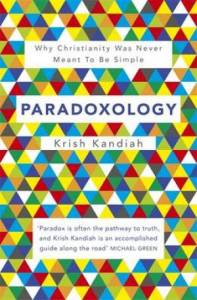
If you find someone who claims they didn’t initially pick up this book because of its cover, I bet they’re lying! The author even ended up talking to the public from a matching sofa! Yes, I did pick this book up because it was a brightly coloured, geometric pattern, but normally I’d have a quick look and put it down again. Instead, I read the back and thought, gosh this sounds interesting. And I wasn’t wrong.

I take forever to read non-fiction, so the fact this took three months isn’t a bad thing. If you saw the number of page corners I’ve folded down, that speaks for itself. For each chapter, the book takes a character (or occasionally a book) and the paradox tied in with it to look at, so the book could be dipped in and out of, chapter by chapter if you wanted to. The chapters are as follows:

  • Introduction
  • Abraham – The God who needs nothing but asks for everything
  • Moses – The God who is far away, so close
  • Joshua – The God who is terribly compassionate
  • Job – The God who is actively inactive
  • Hosea – The God who is faithful to the unfaithful
  • Habakkuk – The God who is consistently unpredictable
  • Jonah – The God who is indiscriminately selective
  • Esther – The God who speaks silently
  • Interlude at the border
  • Jesus – The God who is divinely human
  • Judas – The God who determines our free will
  • The Cross – The God who wins as He loses
  • Romans – The God who is effectively ineffective
  • Corinthians – The God who fails to disappoint
  • Epilogue – Living with Paradox

He highlights in his introduction how these aren’t questions every asks, but that a lot of people avoid asking, for fear of shaking our faith. At one point I was going to put in here the bit from each page that I folded down, but that would now be a tad excessive. But I’ll share two or three – Kandiah’s text is littered with citations, quotes and footnotes, so I’ve given credit to others where it’s due:

“Cheap grace is the preaching of forgiveness without requiring repentence, baptism without church discipline, Communion without confessions.” – Dietrich Bonhoeffer

“It was no accident, either, that God appeared to Moses as a flame. The movement of a flame and its bright colours attract us, and yet the heat of the flame pushes us away.”

“There is no such thing as atheism. There is no such thing as not worshipping. Everybody worships. The only choice we get is what to worship.” – D F Wallace

There’s a lovely story from a Royal Film Premiere when he didn’t quite get to meet the Queen, an excellent look at the hotel with infinite rooms problem, and wave particle duality and Schrodingers Equation. He also introduces us to some paintings and the significance in what they show – I felt quite well educated after reading this!

The only critique I’d give this book is that some chapters could have been helped by starting with either an overview of the story of the character we were looking at, the relevant bible passage, or at least a reference to the correct bible passage. I have to confess, when we jumped into Habakkuk, I didn’t have a whole load of background knowledge to go by!

paradoxology


Sermon Notes: The LORD God Almighty

19 07 2015

I haven’t done a blog writing up my sermon notes in a fair while. I’ve had many busy weekends that result in napping on a Sunday afternoon, and once the weeks piled up I just put it off for ages, so sorry about that!

That said, this morning we had a great and encouraging sermon looking at Revelation 4 & 5 and I thought I’d share what I scribbled down:

  • Handel wrote the Oratorio of the Messiah over 15 days, sometimes working more than 20 hours in a day, in response to these two chapters.
  • John saw this vision, not from somewhere safe and bright, but while in exile for declaring “Jesus is LORD!”
  • John, having seen this vision, is reduced to using items and words of this world to attempt to describe the LORD God Almighty. The English language just isn’t capable of this!
  • We worship to proclaim to all powers – Our God reigns!
  • This reality we live in is temporary and passing away, we’re preparing for something eternal.
  • When down in the dumps, check out these chapters – it’s not going to be boring in heaven!
  • The best theology results in worship, not just head knowledge.
  • The reason worship is so relevant for our lives and this world is that it is the reality for eternity.
  • There is so much more glory and majesty to come than life in Surrey – hallelujah!
  • D-Day has happened, we await VE/VJ Day
  • Satan’s time is limited. He will have no place in the new heaven and new earth
  • The world is passing, there’s nothing more real than what is to come.
  • Not just Sundays, but every day should be an act of worship to the LORD God Almighty.
  • There is so much we don’t know about God – He’s too big, He’s without beginning or end, He’s unfathomable and indescribable. We can only be lost in awe and wonder.


Sermon Notes: The nature and role of government in the bible

4 05 2015

A couple of weeks back we had a church prayer meeting for the upcoming election, and it opened with a short sermon on government in the bible, so I thought, with three days to go until the election, I’d share my notes from it incase they’re helpful.

“The Son is the image of the invisible God, the firstborn over all creation. For in him all things were created: things in heaven and on earth, visible and invisible, whether thrones or powers or rulers or authorities; all things have been created through him and for him. He is before all things, and in him all things hold together. And he is the head of the body, the church; he is the beginning and the firstborn from among the dead, so that in everything he might have the supremacy. For God was pleased to have all his fullness dwell in him, and through him to reconcile to himself all things, whether things on earth or things in heaven, by making peace through his blood, shed on the cross.”
– Colossians 1 vv 15-20

“He said to them, ‘Then give back to Caesar what is Caesar’s, and to God what is God’s.” – Luke 20 v 25
Most would say this verse divides the world into a religious domain and a government domain, but God can’t be level with Caesar, He is far above him. “The earth is the Lord’s, and everything in it.” – Psalm 24 v 1a.

The Bible has government down as useful yet limited.

David is described as a king after God’s own heart whose throne would be established forever. Yet when Israel asked for a King this was a rejection of God’s rule over them.

Governments can do many positive things, for example: advance education, justice, equality, employment opportunities. Yet they can also abuse power, form oppressive regimes, persecute citizens.

We’re called to submit to government: “Let everyone be subject to the governing authorities, for there is no authority except that which God has established. The authorities that exist have been established by God.” – Romans 13 v 1.

Government is limited, firstly by the existence of other human authorities, including church, family and individuals. We should be lobbying government and campaigning against policies that violate God’s teaching. Try Christian Concern or the Evangelical Alliance.

The word government essentially means helmsmanship (“the action or skill of steering a ship or boat.”). This could be of the state, the church, a family or an individual. Government as we think of it would be civil government.

Government is limited, secondly by the means at its disposal. Its only punishment is the removal of someone’s freedom or property. Whereas Jesus said “Jesus said, ‘My kingdom is not of this world. If it were, my servants would fight to prevent my arrest by the Jewish leaders. But now my kingdom is from another place.’” – John 18 v 36.

Government is limited in the scope and influence God gives to it, for this reason, Christians can legitimately disagree about politics. No government will match up to the rule that we’ll one day live under in a new heaven and earth.

In this country we’re fortunate as Biblical principles still shape a lot of the political landscape.

We need to prayerfully consider our vote and ask God to help us to vote wisely to promote principles of submission to law, accountability of government, equality and justice.

There are many resources to look at political parties’ policies from a Christian perspective. I mentioned some of these in a previous post


Votewise 2015

9 04 2015

I’m one of those people that doesn’t have an allegiance to a particular political party, and so with the election coming up, and trying to read and compare all I can to form an opinion on who I’d like to vote for this time around.

This book is excellent for an unbiased overview of various policy issues with a biblical perspective, and hearing from Christian members and MPs of the five major parties.

It starts with a general intro to why we should be more involved in politics as Christians, not just at an election, it says in fact that voting should be the last thing we do! Then we cover various topics from the deficit, to Europe, to the NHS and many more and look at what the bible might have to say in each vein. The book finishes off with a couple of pages each from Christians who are either MPs for their party or members of their party, each explaining why, as a Christian, they have chosen to be a part of the party that they have.

I’d say it’s a great piece to help with your research if, like me, you haven’t settled on who to vote for in 4 weeks time. At just over 100 pages it’s not too heavy, and comes in decent size chunks to digest as well.

votewise 2015


Lent

22 02 2015

Gosh we’re much further into lent than I intended to be when I got this blog post written, over halfway in fact [handy tip: Mothering Sunday is always three weeks before Easter] but hey, what’s life without a little busy-ness?

I don’t think I’ve ever done the same thing for Lent twice, most things I don’t do anything, but over the years I’ve tried a few things

  • When I was probably about 14 I did the unthinkable and gave up Chocolate for 47 days. (Yes I know we think lent is 40 days, but actually that either a) doesn’t count Sundays or b) stops at Palm Sunday). Now those of you who know me will realise what a challenge this is – in writing this sentence I ate at least 10 giant chocolate buttons. But I managed it. On Easter morning I was very excited and went to eat some of that beautiful stuff, but the taste of it made me feel ill. At that point I said that having proven that I could do it, I would never give up chocolate for lent again, as I don’t want chocolate to make me feel that way! (Sadly I’m probably far more dependent on it now)
  • A year or two later I decided to take something up instead, and so first thing each morning I decided to drink a large glass of water to try and be a bit healthier. I did it and it was an easy one, but I don’t know that I really felt any benefit.
  • About five years ago I gave up something a bit less conventional, and a little more concerning that I felt it necessary… I gave up buying DVDs, or at least, DVDs for myself. I bought one DVD that Lent, for someone’s birthday, but again stuck to it. I just was going through a phase of using HMV and Amazon to get an awful lot of cheap DVDs, so felt it would be a good idea to stop for a bit.

This year however, I’ve been reading a daily devotional book by Maggi Dawn. I did her advent book at the end of last year and enjoyed it, so thought I’d give this one a go too, and on the first Friday of Lent, she shared some particularly interesting stuff about its history and purpose, which I thought I’d share with you here. (Obviously she puts it far more eloquently, but I’ve just summarised the bits that stood out to me).

  • Originally, the Lenten fast was not just about giving up luxuries, but everyday essentials. So, not only would you give up coffee, alcohol, chocolate, but also meat and all animal related products (eg milk, eggs, cheese). It was about giving up the things you depended on, so that verses like “Man shall not live by bread alone” – Matthew 4v4 were reality. We’ve made it into something about the individual, when it was always a full community exercise in the past.
  • Lent was also not about self improvement. We tend to give things up or take things up to cure a bad habit in ourselves, to lose weight, or to better ourselves, but originally it was just about understanding how our daily existence depended on God.
  • It’s not about impressing God either. No amount of fasting will change His view of us, He loves us anyway. This is about humbling ourselves.

Now I’m definitely not saying I’m about to go out and do this, but when Lent comes around and we all start to ask each other what we might give up, this really puts an interesting light on that conversation.


Sermon Notes: God in 3 Persons – Mark 1 vv 9-11

31 01 2015

I think I’m three weeks behind now, but because in the last three weeks I’ve done Sunday School, we’ve had a baptism and an all-age service, this will actually get me back up to date!

This term our church has started a new series on “Delighting in God”, looking at His perfect attributes.

The bible gives us the following doctrine of the Trinity:

  1. God is three distinct persons“May the grace of the Lord Jesus Christ, and the love of God, and the fellowship of the Holy Spirit be with you all.” – 2 Corinthians 13v14
  2. Each person is fully God
    • Father – “In the beginning God created the heavens and the earth.” – Genesis 1v1
    • Son (“Word”) – “In the beginning was the Word, and the Word was with God, and the Word was God.” – John 1v1
    • Holy Spirit – “Then Peter said, “Ananias, how is it that Satan has so filled your heart that you have lied to the Holy Spirit and have kept for yourself some of the money you received for the land? Didn’t it belong to you before it was sold? And after it was sold, wasn’t the money at your disposal? What made you think of doing such a thing? You have not lied just to human beings but to God.”” – Acts 5 vv 3-4
  3. There is one God“Hear, O Israel: The Lord our God, the Lord is one.” – Deuteronomy 6v4

There are some analogies that help us with this, but none is perfect. For example:

  • The three states of water
    • Water in three distinct forms – Ice, Water, Steam
    • All three forms are the same substance, H20
    • BUT H20 cannot be all three forms at the same time
  • A person has many roles (eg: Father, Office Worker, Neighbour)
    • The person is all three roles at the same time
    • All three roles are still the same person
    • BUT It is all of one person, not three distinct people

Some same that all roads lead to God, but this is not the teaching of the bible, the Trinity does not align with Islam’s description of Allah, e.g. the Koran says that Allah has no son.

We see all three elements of the Trinity at work in unity at Jesus’ baptism. As Jesus is baptised, the Holy Spirit descends in the form of a dove, and the Father speaks.

At the heart of the Trinity is a loving relationship.

We are not people who are mainly into the Father, or mainly into the Son, or mainly into the Holy Spirit. Some churches become caricatured to focus too much on one aspect.

  • High Anglican churches can be seen as focussing on God the Father
  • Evangelicals tend to be caricatured as focussing mainly on Jesus as the Word, and so the preached Word
  • Pentecostals can be caricatured as mainly focussing on the work of the Spirit

We should never be afraid of the power of the Holy Spirit, it will never do anything worth fearing. Being filled with the Spirit will always bring glory to Father, Son & Spirit.

We are adopted children of God, unlike Jesus who is the Son of God, but through the Spirit God desires to share the love He has for His Son with His adopted children.