Internet highlights – w/c 4 May 2025
10 05 2025Comments : Leave a Comment »
Categories : The Best of the Internet
Internet highlights – w/c 27th April 2025
3 05 2025Comments : Leave a Comment »
Categories : The Best of the Internet
Internet highlights – f/c 13th April 2025
26 04 2025Comments : Leave a Comment »
Categories : The Best of the Internet
The Official History of Britain: Our story in numbers as told by the Office for National Statistics – by Boris Starling
19 04 2025This book was so much fun – I know you don’t get that from the title, in fact, it sounds *incredibly* dry, but I assure you, it’s a fun read! All sorts of cynical comments and random tangents make it a really easy read, all while being really interesting! There were jokes at the expense of Tottenham fans and the population of East Anglia, as well as random bits of trivia and at times, just following his train of thought wherever it went!
The book is split into 5 sections:
- The first three look at how things have changed over the last 200 years that regular censuses have been taken (Who we are, what we do, where we are)
- The fourth is a focus on the 1921 census, which was just after the Spanish Flu, and given this was written in 2020 in the depths of the pandemic, a lot of comparisons are drawn.
- And then finally an imaginative look ahead to what the 2121 census might look like, both in results, and how it’s achieved.
I really wanted to give this 5 stars, but there were just a few mistakes that meant I couldn’t do that: Categories mislabeled on a graph key, black and white diagrams with shades of grey too similar to decipher, and tables which didn’t show units, making them confusing to interpret. as well as one instance of talking about a value decreasing and then showing it increasing….. other than that, brilliant!
I’d be really interested in reading a re-issue of this now that we’re out of COVID (for the most part), with a bonus chapter or two looking at how it affected things as a lot was made of what effect it might have, but at the time of writing, it was too soon to tell.
As it is, it was bookended with this quote from Lord Kelvin: “If you cannot measure it, you cannot improve it”

Comments : Leave a Comment »
Tags: book review, book reviews, non fiction, stats
Categories : Books I've Read
Internet highlights – w/c 6th April 2025
12 04 2025
Comments : Leave a Comment »
Categories : The Best of the Internet
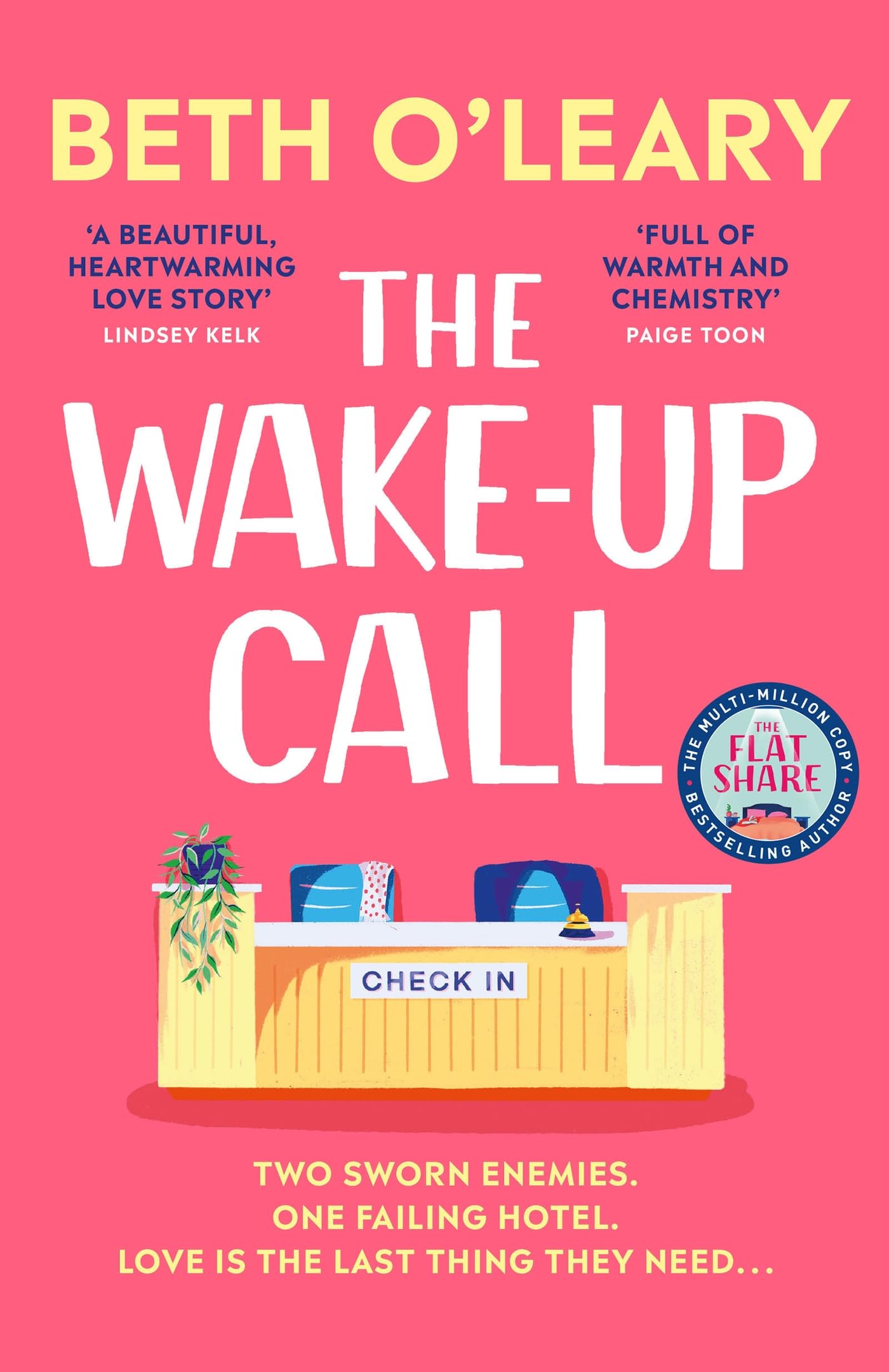
The Wake-Up Call – by Beth O’Leary
11 04 2025My annual Beth O’Leary read, this time it’s based around two staff members at a hotel who get on so badly that they intentionally never put them on the same shift. You already know what’s going to happen, classic enemies to lovers.
I enjoyed the non-romantic parts of the storyline, the hotel in trouble, trying to find owners of 5 rings in lost property, coping when friends move away, but the romance side of it felt quite drawn out, even though I read the book in 4 days! It got steamier than I remember some of her other books getting too, but managed to avoid anything too graphic. I think my issue comes down to the fact that there was just a bit too much yearning…. that said, I still gave it 4 stars on goodreads, because I liked the rest of it!
I feel like I’m coming off quite negative, but the side characters were a lot of fun, and I grew to like the main characters as the book went on, other than when they were fawning over each other (they alternate narrating each chapter between them).
It’s an incredibly easy read, as evidenced by my reading speed, and if you liked her other stuff, you’d like this too.
A couple of funny lines to finish:
“I’ve always been partial to an exclamation mark, Full stops just seem so… grown-up. When I stop wanting pick-and-mix for dinner, that’s when I’ll start using full stops. That’s real adulthood.”
“When I first moved to the New Forest, I was astonished to find myself caught in a traffic jam caused by a gaggle of unfazed ponies, but I’m used to them now. They roam wild around here – it’s no stranger than seeing a pigeon.”
Comments : Leave a Comment »
Tags: beth o'leary, book review, chick lit, fiction
Categories : Books I've Read
Chasing the Dragon – by Jackie Pullinger
8 04 2025Like many books of this genre (is “missionary testimony” a genre? If not it should be), this managed to inspire and discourage me all in one (but don’t worry, I gave it 5 stars on goodreads!).
Jackie Pullinger was a missionary in Hong Kong (and from what I can tell having googled, still is – in her 80s!), she moved there in 1966, and this book shares her experience of sharing Jesus, particularly with drug addicts and gang members in the old Walled City.
Her stories are amazing, and her methods so direct, with so many folk she would immediate explain who Jesus is, what He did for them, how they could know Him, and she would invite them to accept Him then and there, often this was quickly followed by them praying in tongues.
And this is what I mean by inspiring and discouraging simultaneously – inspiring is obvious, but discouraging because, my goodness, I’ve never seen anything of the like, nor know anyone who has! I fully believe it did and can happen, but her faith is something special! God has the power to do amazing things, but we just don’t have the faith to ask
A couple of my favourite bits:
“[Jesus] was the one perfect man who ever lived; He only did good, healed people and raised them from the dead, but His enemies put Him on a Cross and killed Him. He died for my sake but He did not wait till I was good before He died for me. He never said He would die for me only if I changed. While I ignored Him He laid down His life for me and even as He was dying He still said He forgave me.”
“Jesus doesn’t expect us to follow Him in our own strength, so if you are prepared to tell Him that you are sorry and ask forgiveness then He will forgive you. You can start again and He will give you the power to help you follow Him. The power is His Holy Spirit.”
Comments : Leave a Comment »
Tags: autobiography, book review, book reviews, Christian, missionary
Categories : Books I've Read, Christian
Internet highlights – w/c 30 March 2025
5 04 2025Comments : Leave a Comment »
Categories : The Best of the Internet
April Fools 2025
1 04 2025Here we go again!
There was a weird thing happening in the last couple of weeks where a handful of brands posted significant changes and then retracted them , as if they just got April fools wrong – eg Lipton said they were stopping their peach ice-tea and then took it back! I also really enjoyed Ikea’s clock change Klokkentroll at the weekend which felt like it could have been one on the right day.
Walkers changing the colours of Salt & Vinegar and Cheese & Onion to match the rest of the crisp world feels April Fools-y, but was four days ago, so I *think* it’s real?! **UPDATE** So it turns out it was an April Fool, but that’s just cheeky doing it so many days before, I’m not impressed.
I’ve been finding stuff right down to the midday wire today, so will probably be back later in the day to tack ones I missed on the bottom…
Anyway, as per usual, a short note under each post incase they delete them later… here we go – enjoy!
Massiv laundry lablets from Smol
Cadbury Creme Egg Goo sachets for chips
Guide dogs starting a food delivery service
Miranda Hart doing a range of pants with Cotton Traders
Wrendale releasing mega size plushie toys
Ant & Dec launch Plank and Deck decking company
Bothy Threads launch Bothy Breads
New Eastenders opening credits
OS Maps tea time alarm
Heinz Dubai Beanz
Waitrose requiring 18+ ID for Easter Eggs
Camping and Caravanning Club Squirrel translator app
Halo Top icecream new flavours including Fish & Chips
Suitcase that’s also a pillow from Dunelm
Poundland Airways
BMW have a hair on the lens on their advert
Pizza Express boxer shorts
Volkswagen free tattoo with every car
Beefeater gyms
Co-op salt and vinegar crisp lip balm
Krispy Kreme discontinuing their original glazed doughnuts
Terry’s chocolate mint toothpaste
Mylee invisible nail gel
Kitkat emergency break kit
Sainsburys food air fresheners
Morrisons flavour perfumes
Babybel wax sleeping bags
Yorkshire Tea microwave tea pouches
Easyjet Jet-ato flavours including snail and garlic, and moroccan tagine
Give Blood vampire loyalty card
Royal Albert Hall immersive Nokia 3310 experience
Old Lego minifigures with hair
IKEA meatball lipbalm
Paddington changes his name to King’s Cross
PG Tips cereal
Mini AI adaptive polite car horn
New jobs at National Trust
Historic Royal Palaces find old painting where someone is wearing a watch
Santander doggy side cars
Lynx with catnip
Timpson scented candle
Pre-toasted Warburtons
My Time Capsule podcast has Donald Trump on
On site microbrewery at Greenbelt
London Eye going on a world tour
Edinburgh Zoo hiring people to pick up a penguin
Honda catnip car seats
British Transport Police ban outdoor footwear on trains
Marmite video that won’t play
M&S Percy Pigs for sale in Target in the USA
Mcvities hotline to report stolen biscuits
National Express flying coaches
Birdseye waffle holes
FlightRadar shows a Concorde flight
Aardman models moving when unsupervised
Marwell Zoo perfume
Subwhey protein drinks
Popsy make your own dresses
Stuff found after midday
Silverstone circuit replacing all corners with roundabouts
Bake Off are adding air-con to the tent
Guy gets Dominos tattoo in exchange for free pizza
Frankie & Benny’s baby food
Innocent adult sized kids smoothies
Boden wet dog candle
Soap clogs from Friendly soap
Mood lenses from Lensology
Butter and salt pringles
Drone delivered portaloos
ABRSM offer Grade 1 Kazoo
Jon Richardson joining the cast of Waterloo Road
Royal Navy submarine display team
Yorkshire pudding cereal
Hovis crust-only loaf
Staedtler removing the stripes from their pencils
Niagara falls drained dry to collect wishing coins
Central Church Bristol adding a helter skelter to their building
Comments : Leave a Comment »
Tags: April Fools
Categories : April Fools round-up
Internet highlights – w/c 23rd March 2025
29 03 2025
Comments : Leave a Comment »
Categories : The Best of the Internet
 ineke.co.uk