Internet highlights – w/c 17th May 2026
23 05 2026Comments : Leave a Comment »
Categories : The Best of the Internet
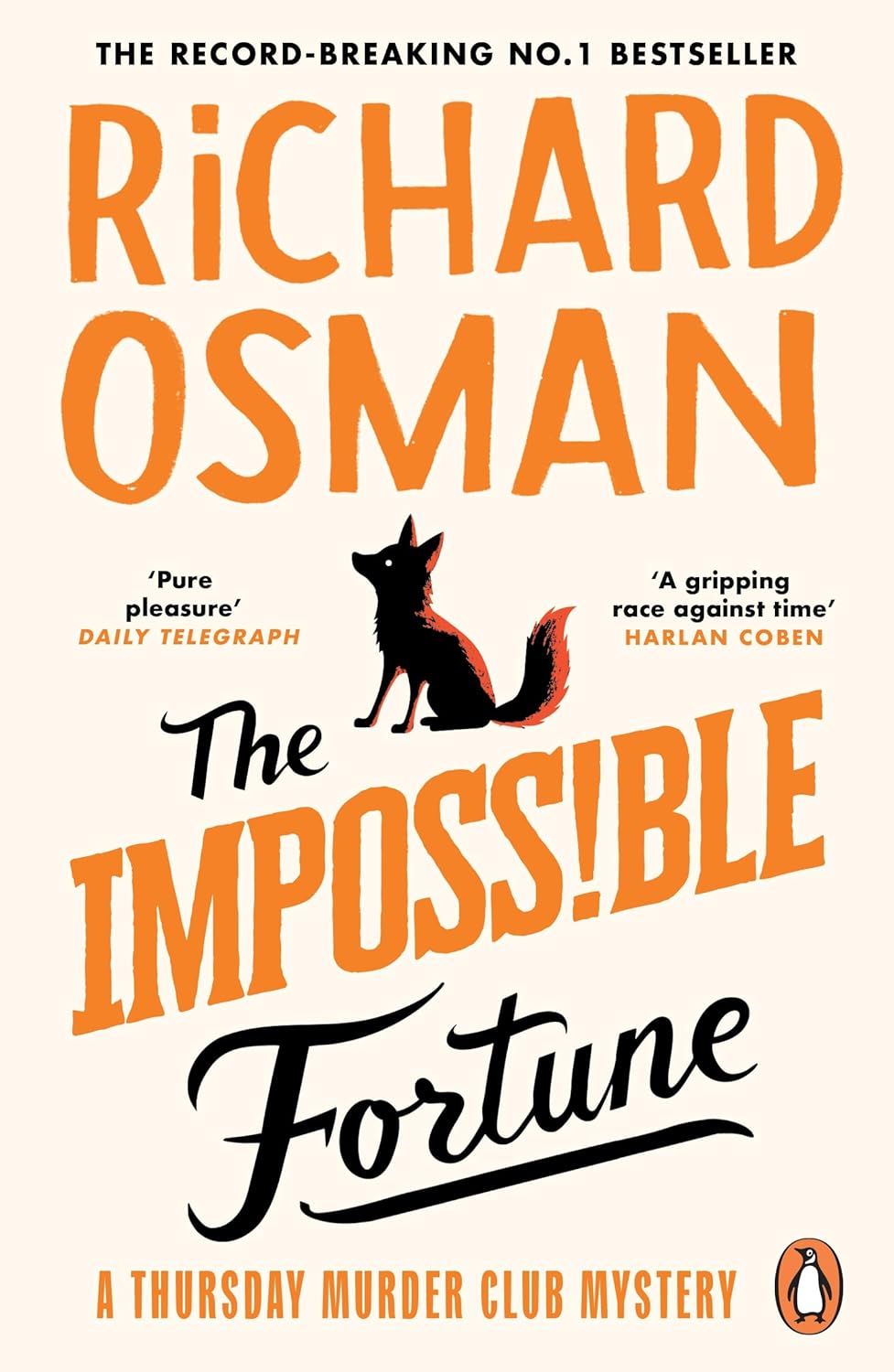
The Impossible Fortune – by Richard Osman
19 05 2026So we reach the fifth book in the Thursday Murder Club series, and I think it’s been my favourite so far! There’d been a two year gap since the fourth book was released, and so after such a long time away, just within a couple of pages of starting I felt all warm and fuzzy, realising how I’d missed the characters, particularly Joyce!
The book start’s with Joyce’s daughter Joanna’s wedding, but within 24 hours we have a missing person, a dead person, and $350m worth of bitcoin at stake if only they can work out how to get hold of 2 parts of a code.
This sounds very dramatic, but of course, it’s Thursday Murder Club, so as well as plenty of excitement, there’s also plenty of mundane and lovely moments, and of course some excellent little lines.
- “If we have different ideas about gluten, we’re going to have different ideas about most things.”
- “That’s the problem with going out. One thing leads to another, and you find yourself going out again.”
- “She remembers when Dan Hatfield had two arms. The money he’d wasted on tattoos on that other arm.”
- “Rightmove teaches you an awful lot about the world, and also a lot about people’s taste in curtains.”
- “That must be the world’s shorted honeymoon […] I feel like Liz Truss.”
- “Amazon deliveries have been the single greatest boon for professional hitmen. Everyone is always expecting one.”
I’m just sad it’s another two year wait ’til the next one now, they’re such a fun gang to hang out with!
Comments : Leave a Comment »
Tags: book review, book reviews, fiction, murder mystery, richard osman, thursday murder club
Categories : Books I've Read
Tuesday Top Three – Eurovision 2026
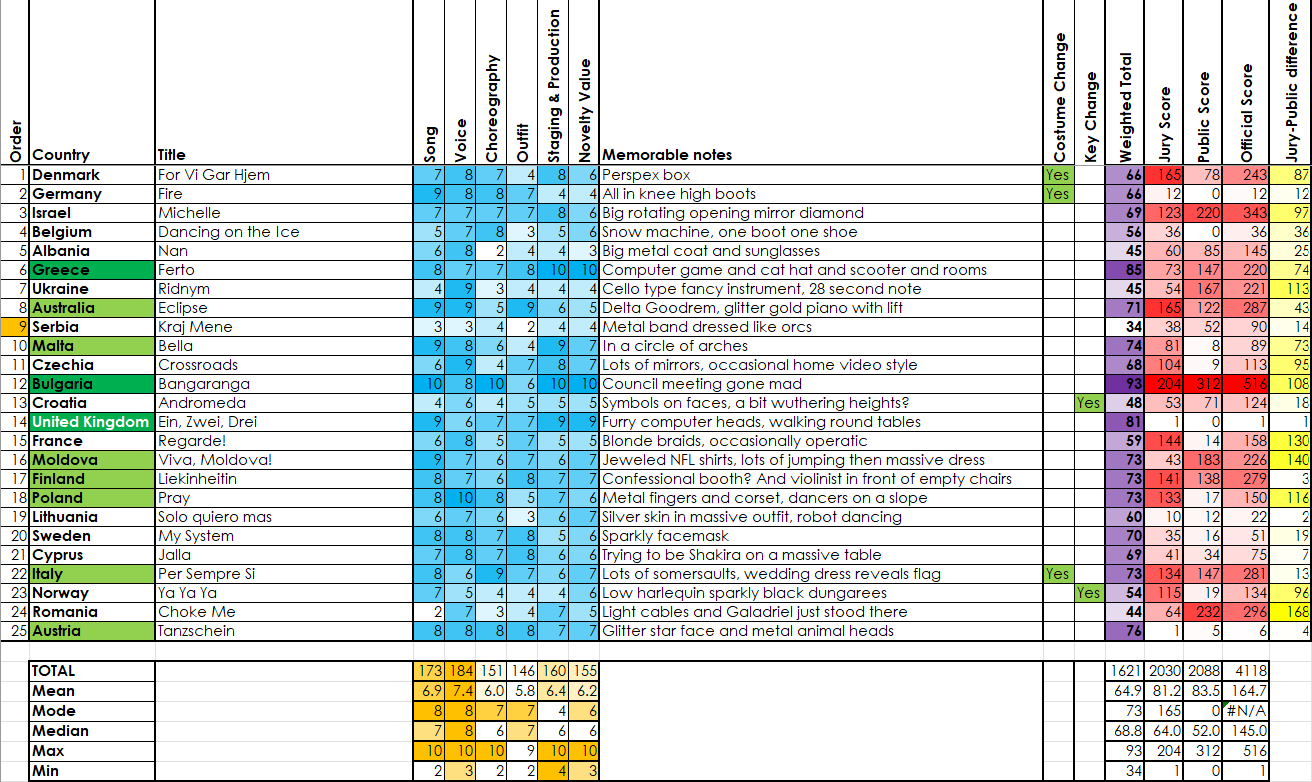
19 05 2026Similarly to two years ago, much as I enjoyed several this year, there were three that stood apart from the rest for me, unlike 3 years ago, I’m putting this out on a Tuesday rather than trying to say F-three! If that’s not enough for you, I’ll list some honourable mentions underneath.
Absolutely delighted that my top scoring act this year actually won the competition, maybe my taste isn’t that bad? (Not that I believe in bad taste in music, just each to their own!) but anyway, a really joyful result 🙂
In fact, to get it up to another number beginning with T, I’ll do seven a) because that’s how many were in my next grouping, and b) because it gets us to a Tuesday Top 10!
So special mentions to Austria, Malta, Moldova, Finland, Poland, Italy and Australia – enjoy!
And of course, this year’s spreadsheet!
Comments : Leave a Comment »
Tags: bulgaria, Eurovision, eurovision song contest, greece
Categories : Friday Five Favourite
Internet highlights – w/c 10th May 2026
16 05 2026Comments : Leave a Comment »
Categories : The Best of the Internet
Internet highlights – w/c 3rd May 2026
9 05 2026Comments : Leave a Comment »
Categories : The Best of the Internet
Flatland – by Edwin Abbott Abbott
9 05 2026This is a weird book. It’s a novella, set in a two dimensional world, narrated by a square. In the first half of the book he explains how their world works, in the second he talks to both the king of Lineland (a one dimensional world) and a sphere from Space (the three dimensional world). Obscure enough for you yet? Well take all that, and then skew your head around it being written in 1884, Victorian times. Bizarre!
So in Flatland all people are shapes, which is how class is decided. The lowest class are triangles, and the more isosceles, the lower they are, all the way through to polygons with so many sides they appear to be circles, these are the highest class of people. All shapes beyond triangles must be regular, or else will likely be banished from society. But we must remember that this was written a very long time ago, and so the exception to the above is women; all women are single lines, which tells you a lot about how they’re talked about in this book eg “they are consequently wholly devoid of brain power”, though at times they are also referred to as “formidable”, and “by no means to be trifled with” thanks to the sharp end of their line, sharper than any man’s angles.
Now, since it’s two dimensional, all you can see is one dimension (in the same way that in our three dimensional world, we see two dimensions), and so all these different shapes, at first glance look like just lines. They identify each other either by feeling, or with a bit of depth perception since there is normally a slight fog or mist. This is all explained in the book in a LOT more detail! You may wonder why they can’t be identified by some colour change or design, well, they used to, but there were problems with people faking their colours, and so now all colours are banned.
You may be spotting many holes in how life might work in a two dimensional world, and handily, these are skipped right over as our narrator, the square, decides it’s high time he moves on to the next section of the book, and so says he won’t have time to cover “our method of propelling and stopping ourselves, although destitute of feet; the means by which we give fixity to structures of wood, stone or brick, although of course we have no hands, nor can we lay foundations as you can, nor avail ourselves of the lateral pressure of the earth; the manner in which the rain originates in the intervals between our various zones, so that the northern regions do not intercept the moisture from falling on the southern; the nature of our hills and mines, our trees and vegetables, our seasons and harvest; our Alphabet and method of writing, adapted to our linear tablets; these and a hundred other details of our physical existence I must pass over.”
So that’s the first half dealt with! In the second, he first meets the Monarch of Lineland, and tries to explain to him life in two dimensions, which he obviously cannot understand, any more than we could understand what a world with four dimensions might look like. In Lineland, they can’t pass each other to get anywhere, but he explains that they can communicate over thousands of miles by sound, even to the point of impregnating, which requires one man and two women, and will always produce three children in that same ratio to preserve how that society works.
Following this, a sphere intersects the plane of Flatland and tries to explain life in two dimensions to the square. The irony of the conversation being the same with the same frustrations at not being understood now the show is on the other foot, is quite funny, but eventually the sphere is able to bring square out of Flatland into Space, and show him!
Then comes his return to Flatland, and his attempts to convert folk to the Gospel of the Three Dimensions, but this is an imprisonable offence….
What did I tell you – weird! Just feels way too abstract for something of that era, though I guess it’s not far off Lewis Carroll, and he wrote some weird stuff too….
Comments : Leave a Comment »
Tags: abstract, book review, book reviews, dimensions, fiction, mathematical
Categories : Books I've Read
Internet highlights – w/c 26th April 2026
2 05 2026Comments : Leave a Comment »
Categories : The Best of the Internet
Internet highlights – w/c 19th April 2026
25 04 2026Comments : Leave a Comment »
Categories : The Best of the Internet
Charlotte’s Web – by E.B. White
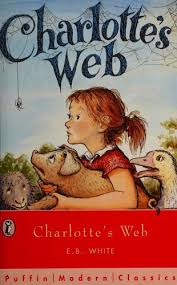
25 04 2026I never read this as a kid, and found it at a book fair in a 3 for £1 deal, so thought I’d give it a go! Other than know it was about a girl, a pig and a spider, I had zero idea of the plot!
The opening is brutal, given it’s a children’s book – “Where’s Papa going with that axe?” it turns out, he’s off to kill the runt of a litter of pigs born last night. What a start! Well Fern (the girl on the front cover) begs him not to, and raises the pig, Wilbur, on a bottle. Other than this bit at the start, I’d argue Fern is made a bit too much of, the bulk of the story is about Wilbur, Charlotte the spider, and the other animals in the barn, while Fern just starts to take an interest in boys. I’m not sure she deserves to be on the front cover!
One thing I struggled with (and I’m aware this sounds stupid) is that while I was very happy to suspend my disbelief insofar as animals talking is fine, but when, a few times in the book, Wilbur did a backflip, occasionally with a half twist, that seemed a bit ridiculous to me. Yes, I heard myself, ridiculous double standards!
Towards the end of the book there is a very sad moment, *spoiler alert* where Charlotte sadly passes away. There’s a line that’s a proper punch in the stomach as the chapter closes – “No one was with her when she died.” But it’s a children’s book, so it still finishes on a positive and we all end happily.
Comments : Leave a Comment »
Tags: book review, book reviews, children's fiction, e.b. white, fiction
Categories : Books I've Read
Internet highlights – w/c 12th April 2026
18 04 2026Comments : Leave a Comment »
Categories : The Best of the Internet

