The Radleys – by Matt Haig

21 08 2024

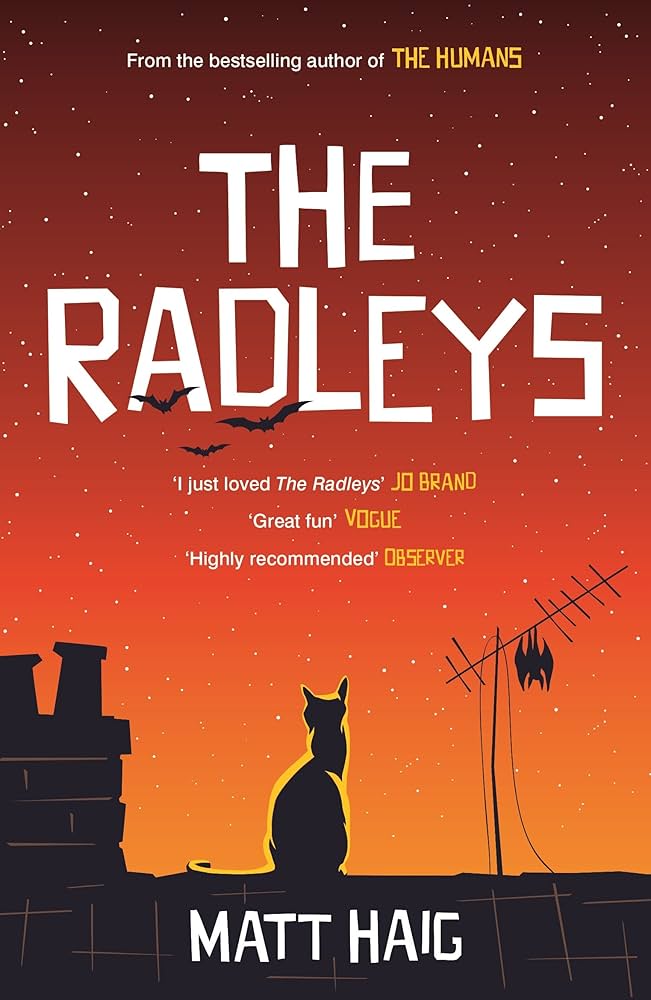
I generally enjoy Matt Haig’s books, and saw they were making a film of this so thought I’d read the book before it came out. What I didn’t realise ’til I started reading it, was that it’s a vampire book, which isn’t really my cup of tea.

The Radleys seem from the outside to be an ordinary family – but actually, they’re vampires. The parents choose to live as abstainers – not consuming any blood, not human, nor vampire. The two teenage children don’t yet know that they’re vampires. Of course, the plot comes from them finding out who they are in rather dramatic circumstances and the fall out from that.

It still felt very Matt Haig to read, and the story itself was fine, easy to keep interested, it’s just not really my genre.

The trailer for the film is below:


Friends, Lovers, and the Big Terrible Thing – by Matthew Perry

31 07 2024

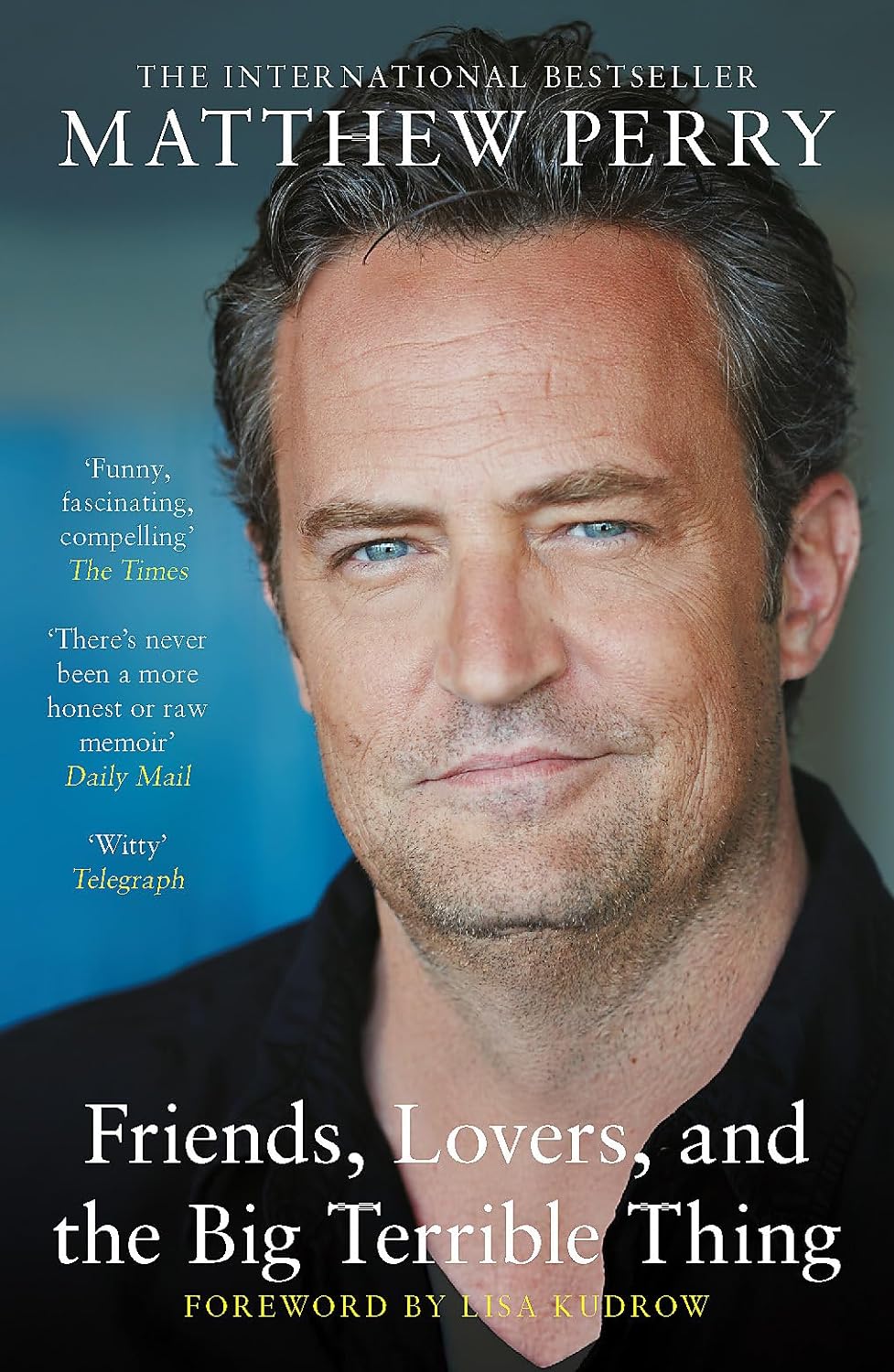
This was such a sad book to read, but I guess it’d be foolish to expect otherwise. It was published in 2022 in hardback, but he died in 2023, and so when the paperback came out this year, while the content of the book is the same, the “about the author” is in the past tense, and that alone broke my heart a little, but it doesn’t get much easier once the book starts. (I’ll be sharing more about the content of this book than I normally do, because it’s not exactly a spoiler to say life was hard for him!)

  • In the foreword by Lisa Kudrow, she finishes by saying, “He has survived impossible odds, but I had no idea how many times he almost didn’t make it. I’m glad you’re here, Matty. Good for you. I love you.” – the heart breaks a little more.
  • Then the prologue starts, “Hi, my name is Matthew, although you may know me by another name. My friends call me Matty. And I should be dead. If you like, you can consider what you’re about to read to be a message from the beyond, my beyond.” – I mean, really, he had no idea how quickly that became true.
  • In chapter one he says, “It is very odd to live in a world where if you died, it would shock people but surprise no one.” – just so accurate for how we felt that day.

A big theme of the book is the problems he had with addiction for most of his life, and we hear how at a month old, he was given barbiturates for colic for a month, and he obviously wonders how much it all has to do with that. At one point as an adult he’s up to 55 Vicodin a day among other things, he names all sorts of drugs that I’d never even heard of before. He tells us that over his life he spent about $7million just trying to get sober, and we hear a lot about that struggle too.

He talks about the women he’s loved with such affection, sadly most of these relationships seem to end because he’s scared, or doesn’t want to bring them down into what he’s dealing with – but remarkably he remained friends with several of them. He also talks about his desire to have children, and knowing that it never happened makes it so sad to read.

He also speaks about God a LOT more than I expected, including a prayer in 1994, not long before he got cast in Friends of “God, you can do whatever you want to me. Just please make me famous.”, then later, an experience he had of God’s presence in his kitchen when at one of his lowest points, and many of mentions of his sureness of God’s existence throughout. I’d seen articles referencing this in the past but never got around to reading them – I will now be going back to see what they have to say (here and here if you’re interested).

He talks about his weight fluctuation when on Friends: “You can track the trajectory of my addiction if you gauge my weight from season to season – when I’m carrying weight, it’s alcohol; when I’m skinny, it’s pills. When I have a goatee, it’s lots of pills.” He states that he was never high when they filmed it, but was hungover sometimes. Season 9 was the only season he was sober for the entirety of.

Towards the end of the book is where it gets tough. If you’d been reading it when he was still alive, it would have been full of hope as he talks about how he’s managed to quit drugs, drinking and smoking, and shares his hopes for the future, for the second half of his life. But of course, those of us reading it now, know that wasn’t to be, and it just made it yet another heart-breaking section.

The only criticism I’d have of the book, and the reason I only gave it 4 stars, is that the structure of it makes it a bit tricky to follow the timeline. It’s a series of chapters which I think are in chronological order, but with interludes between each which could be from anywhen, and even in the chapters, I’m not convinced he doesn’t sometimes flashback. Just a mention of a year here or there would be helpful. I mean, when he talks about Friends he does sometimes mention the series we’re at at that point, but maybe just something at the start of each chapter so you know how far time has moved on, and where we are, would have made me feel a little less lost at times. One story I think he told twice, but once in the prologue and once much later on when it fit in the timeline, and I guess he told different parts of it more the second time, either way, felt a bit odd.

While it was a sad book to read, it was easy to read as far as flying through it goes.

I’ve used the words “sad” and “heart-breaking” so many times in this post, but even so, I’m glad I read this book.

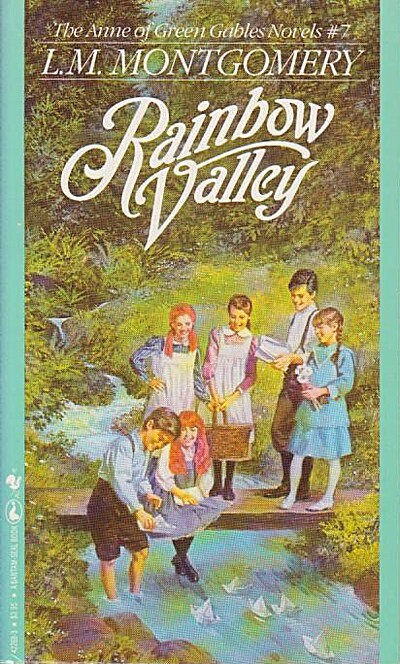
One, Two, Buckle My Shoe – by Agatha Christie

21 07 2024

I like that Agatha Christie gives some of her books nursery rhyme titles, so here’s another one I grabbed from a local charity shop – I wonder if there are any others, I’ve read a few now!

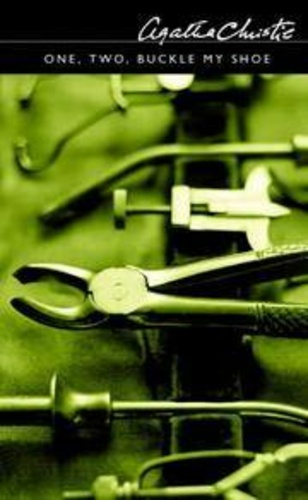
The title has very little to do with the story other than she does manage to tell it broken into sections which come under each line of the poem. The incident is actually set in a dentist’s surgery – Poirot goes for an appointment in the morning, then around lunchtime, the dentist is found dead with a gun by him; all signs point to suicide, but Poirot thinks there’s more too it.

I walked past my dentist surgery in the week and couldn’t work out why it gave me the creeps, until I remembered that I was reading this!

It’s good fun (murder aside), Poirot is on form as ever, and it keeps you guessing the whole way through. I do struggle sometimes with remember who each character is, but that’s probably more on me than the author!


In A Thousand Different Ways – by Cecelia Ahern

14 07 2024

She’s back! For the last few books I’ve read of Cecelia Ahern’s they’ve been good, but not at the level of some of her earlier stuff that I really loved. With this book, it really feels like she’s back at her best, back at magical realism which is I think where her best work lies.

Aged eight, Alice suddenly starts to see colours around people, these colours represent their emotions, a sort of emotional synesthesia, and more than that, if she gets too close to the colours physically, she starts to feel them too. This results in her distancing herself from large groups, wearing dark glasses and gloves as much as possible, and refusing to get too near people – it makes life a bit tricky. On top of this, her mother has bi-polar disorder, and her younger brother absorbs every feeling she puts out, to his detriment as the book goes on. Alice ends up at a boarding school for troubled youngsters, and then we follow her through what happens after that as a young adult. One day she sees a man on a train who has no colours, she can’t read him at all, which she’s never experienced, and it intrigues her. I’ll leave it there!

It’s such an interesting idea to read about, and this is the sort of things I’ve always loved with Cecelia Aherns stories.

A few lines that made me turn page corners down:

  • “I sit in the quiet area, reserved for kids who aren’t feeling well, who have a broken arm or leg, or some sort of special needs. My special need is to be away from everyone. Every single person.”
  • “You can’t rely on other people’s weaknesses, you’ve got to work on your own strengths.” “But what if seeing other people’s weaknesses is my strength?”
  • “Training to do something doesn’t actually mean you can do it.”


The Last Devil to Die – by Richard Osman

22 06 2024

The fourth book in The Thursday Murder Club series is a good one!

The gang are back, and trying to work out who killed an acquaintance of theirs who worked in the antiques business – he was in one of the previous books, though I couldn’t remember him, but that’s probably just me!

There’s a side character in the books who has dementia, and that became a much more prominent part of this book. I always find dementia stories hard, but there was a whole chapter (23) written from his perspective that was just so heartfelt and beautifully written, I really appreciated it. A mention of dementia in the acknowledgements actually made me cry!

As per usual, I won’t be giving you much more about the plot for fear of spoilers, but I really enjoyed the characters, the story, all of it. I felt like I was there hanging out with them, it was just so enjoyable, and I flew through it in just eight days – it did wonders for my Goodreads goal!

Some of my favourite one liners from the book:

  • “You must only ever glance at new customers. Some people want eye contact, but most do not. You must treat customers like cats, and wait for them to come to you. Look too needy and you’ll scare them off”
  • “If there is one thing local councils like more than the Data Protection Act, it is money.”
  • “The nibbles were mainly Aldi, but with a sprinkling of Waitrose for effect.”
  • “He smells cheap, fried food and urine. The downside of never complaining is that the British really do put up with a lot.”

I learnt something from this book too: “An antique is anything over one hundred years old. Everything else is vintage, or collectable.” So there you go!


Surprised by Joy – by C.S. Lewis

14 06 2024

As part of my ongoing “one C.S. Lewis grown up book per year” target, I picked up Surprised by Joy. This is his autobiography, but focussing solely on his journey towards Christianity, finishing with his conversion as a young adult.

A lot of the time seems to be given to his schooling in various forms (“Life at a vile boarding school is in this way a good preparation for the Christian life, that it teaches one to live by hope.”), and then through WWI, university and into work in academia. I enjoyed reading his story, but occasionally, and more so towards the end, he got quite philosophical, which got a bit too clever for me, which I’ve found to be a common occurrence with these books.

He’s friendly in the way he talks though, and quite self-deprecating, at the end of chapter one saying he’s written it so that people can “see at once what they’re in for and close the book with the least waste of time.”


The Lazy Genius Kitchen – by Kendra Adachi

11 06 2024

I love the Lazy Genius content on social media, and I loved her first book, so getting this one was a no brainer! If you’ve not heard of her, I’d recommend reading my write up of The Lazy Genius Way to get a feel of what she’s about (TL:DR, be a genius about what matters, lazy about what doesn’t, and you name what matters, so it’s not a cult). Kendra writes in a lovely chatty way, so it’s very easy to read. She describes herself has having big sister energy, which she most certainly does!

This book is not a recipe book, but how to use the Lazy Genius principles in the hardest working room in most homes. There are two recipes in it, but they are more like side notes to her main points. The book is in three sections, the first goes through the five steps to use to Lazy Genius any part of your kitchen, the second helps apply these steps to various parts of of your kitchen, and the third section, my favourite, is a whole load of resources, lists, methods, advice, to help you use your kitchen better.

The only reason I didn’t give it five stars is, while this book does work for anyone, single, family, etc, there are a couple of points where it definitely assumes your kitchen is a little bigger than my tiny one-bed-flat kitchen, she’s a big fan of the zone, and I don’t have space for as many as she sometimes suggests, nor is any part of my kitchen far from any other part, so when she suggests storing certain things near each other, mine all is already!

But this doesn’t detract, it’s a great book to read through once, and then come back to as a reference, most definitely.


The No2 Feline Detective Agency – by Mandy Morton

16 05 2024

I bought this for my mum as a bit of a joke as she loves the Alexander McCall-Smith books, and then she, possibly as an act of revenge, leant it back to me.

The thing is, there is nothing about this book that requires the characters to be cats, which is surprising given that’s the main thing they’ve changed from the books they’re spoofing. The cats drive cars, they use pens, they sit at tables, they wear human clothes, they don’t even lick themselves clean (there’s reference to scrubbing their fur with soap).

The story itself is fine. It’s cute and cosy, has dramatic turns and likeable characters. But the story would have been exactly the same if they were humans, so it all seemed a bit pointless. There is one tiny bit of the story that being a cat sort of worked better for, but a negligible change would have made it work for people too so it didn’t seem enough of a point.

Nice idea, decent story, just not enough made of it’s main selling point to make the joke work for me.


The No-Show – by Beth O’Leary

6 05 2024

I needed an easy read and this definitely was one, evidenced by the fact I read it in eight days even though I was trying to get through a magazine at the same time!

Three women, unknown to each other, have valentines plans, but are stood up, all by a man by the name of Joseph Carter. Each of their stories begins there, and we see what happens over the following year.

It’s easy to read, engaging, becoming addictive later on, and I very much enjoyed it – great bank holiday weekend read!


Invisible Women: Exposing Data Bias in a World Designed for Men – by Caroline Criado Perez

29 04 2024

I’d wanted to read this for ages, and then suddenly a friend was offering to lend it to me, so I jumped at the chance.

It’s not a happy read, the whole way through, you are pummelled with negative stories and stats, that make you realise just how far we still have to go; there’s not a lot of celebrating progress made. The afterword talks a little about what can be done to improve things, but I think it might have made the book a little less harrowing if this was sprinkled more throughout.

That said, it felt like a very important read, it’s a reality. And it’s not just one person blindly sharing their opinion, it’s incredibly well researched; at the back of the book are 70 pages of references used! (Which gives an added bonus of the book not being quite as long as you first think it’s going to be!)

The author talks a lot about the “gender data gap”, this is when studies/designers/anyone just use data from men and assume it’s the same for women, or use data of both genders but don’t disaggregate it to look for differences between the two. But this isn’t right, because being equal doesn’t mean being the same.

Most of the content can be summarised in three main themes, the female body and its invisibility, male sexual violence against women, and unpaid care work.

A few quotes to give you a flavour:

  • “They didn’t deliberately set out to exclude women. They just didn’t think about them. They didn’t think to consider if women’s needs might be different.”
  • “[Women] were often discounted from studies as “confusing factors””
  • “We continue to rely on data from studies done on men as if they apply to women.”
  • “Men are more likely than women to be involved in a car crash […] But when a woman is involved in a car crash, she is 47% more likely to be seriously injured than a man, and 71% more likely to be moderately injured […] She is also 17% more likely to die. And it’s all to do with how the car is designed – and for whom.”
  • “There is one EU regulatory test that requires a […] female dummy. […] This dummy is only tested in the passenger seat. […] This female dummy is not really female. It is just a scaled-down male dummy.”
  • “PMS affects 90% of women, but is chronically under-studied: one research round-up found five times as many studies on erectile dysfunction than on PMS.”
  • “Getting to grips with the reality that gender-neutral does not automatically mean gender-equal would be an important start. And the existence of sex-disaggregated data would certainly make it much harder to keep insisting, in the face of all the evidence to the contrary, that women’s needs can safely be ignored in pursuit of a greater good.”