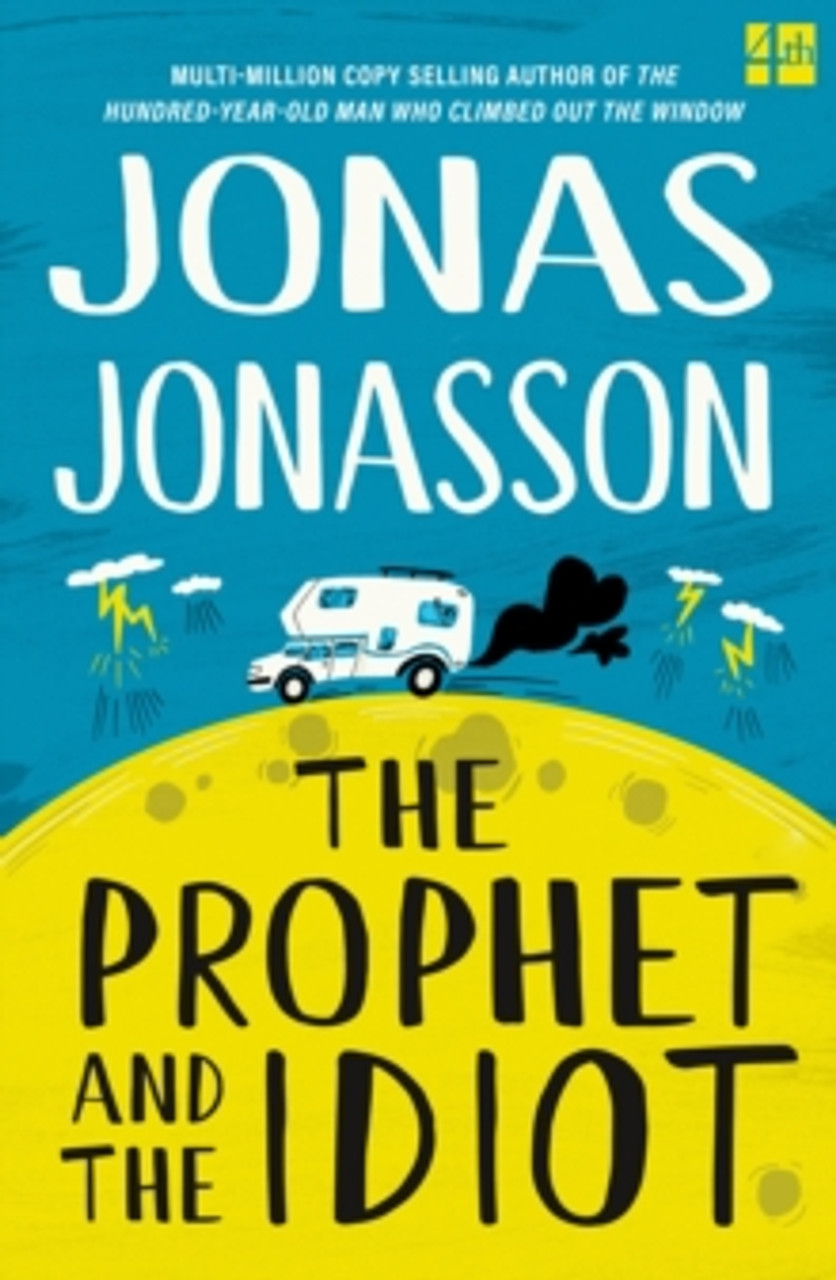
The latest book from Jonas Jonasson, and just as crazy as the rest of them!
The prophet is a lady called Petra, who has calculated that the world’s atmosphere is going to collapse in 12 days, but no one will listen to her. The idiot is a young man called Johan, who has spent his childhood as his brother’s unwitting servant, before his brother sells their fathers home for millions, leaves Johan an RV, and takes the rest of the money and scarpers off to a diplomatic job in Rome – but with Johan thinking this is incredibly generous of him. After a collision in a motor home park due to Johan having issues with the brake pedal, he and Petra meet!
For various reasons they end up on a journey in the RV with a lady called Agnes driving, and Johan as an extraordinary chef, trying to right some wrongs before the world ends. Many things occur which I won’t tell you about here, but it does include (as a high proportion of his books do) an encounter with a former world leader, as well as fraud, dictatorship and all sorts of messy things.
It’s crazy, but all his books are. This one very much falls into two parts, but I’m not going to tell you what separates them, so this is very hard to write!
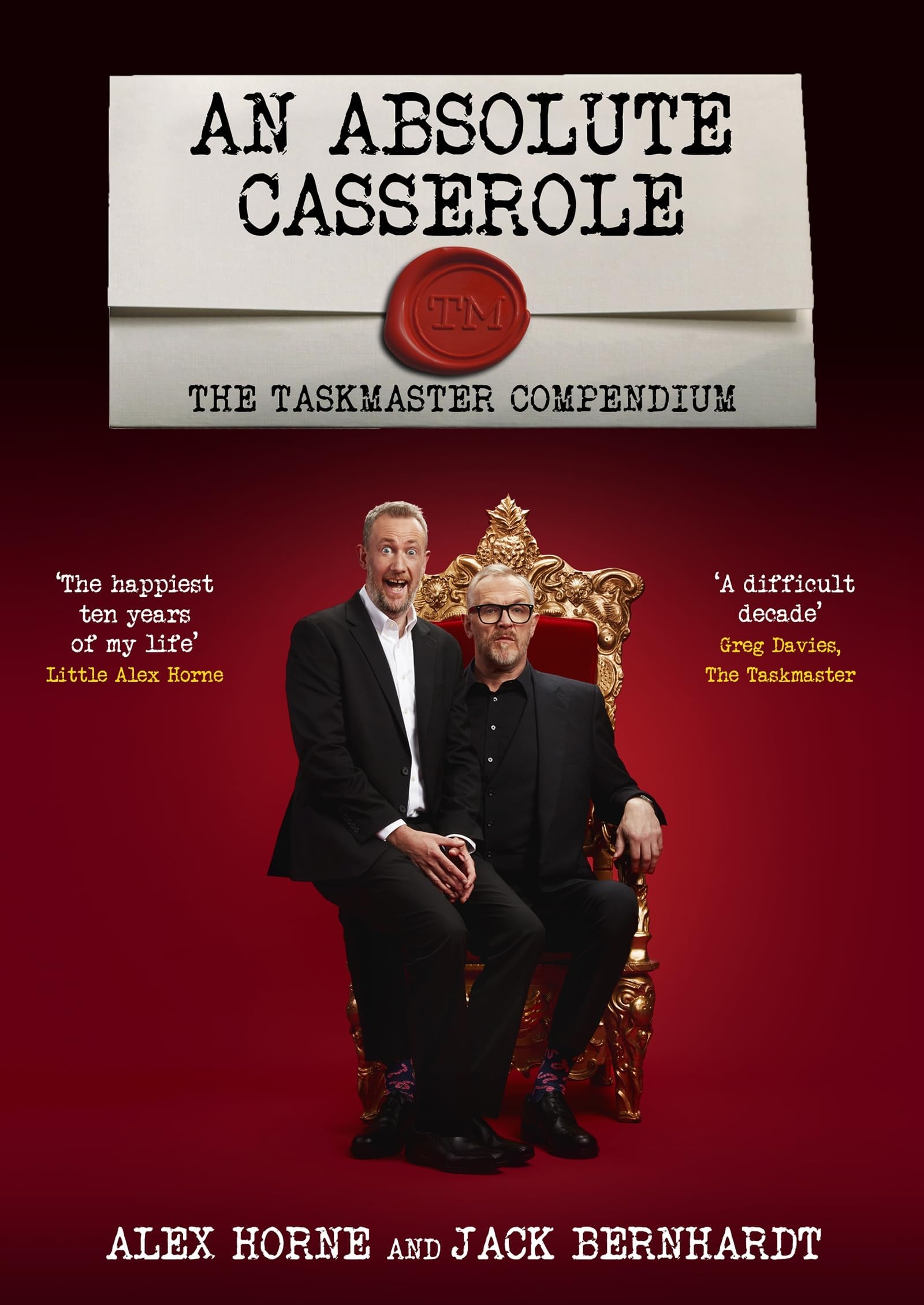
A joyful book to start the year, full of trivia, stats and stories about one of the maddest shows on the telly.
For those of you not familiar (maybe you’ve been under a rock?), each series of Taskmaster takes five comedians and pits them against each other in a variety of tasks, some complicated, some seemingly simple, some creative! Lateral thinking is often helpful, but be careful because the Taskmaster’s word is final, and if he doesn’t like the way you’ve interpreted the question, he will not hesitate to award 0 points.
The book has been put together by Alex Horne who is the brains behind the show (even if he only appears on screen as the assistant), and Jack Bernhardt who was originally I think just a super-fan, and is all about the stats – he has spreadsheets which put mine to shame, and so is able to pull up all sorts of facts about contestants on the show.
Alex shares the history of how the show came about, including all the tasks that were part of the Edinburgh show he did before it became the TV show we know and love, and Jack shares stats like most episode wins and most inconsistent contestant. Then there are all sorts of highlights and anecdotes sharing the fastest tasks, tasks with animals, “recipes” for food tasks, tasks involving hair – all sorts of things!
It also talks about some of the amazing work that was done in lockdown “home-tasking” to engage kids, and the work that’s been done with schools too, which actually ended up with Alex getting an honorary doctorate (his speech is also in the book). And there’s a section in the middle in colour which shares a curated selection of some of the artwork created on the show over the last 10 years.
I really enjoyed it, I don’t think you’d get much from it if you hadn’t seen the show, but for those of us who have, it’s a lovely reminisce combined with analysis and behind the scenes information, it was everything I hoped it’d be!
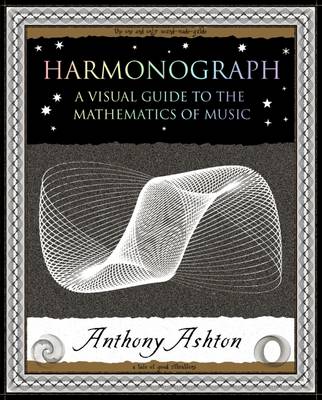
I’d wanted to read this for ages and got it for Christmas – it was shorted than expected, at around 50 pages, but also a much higher intellectual level than I expected.
My main issue is that I didn’t really understand one of the concepts that was used a LOT in the text. If there had been an extra page or two near the start to explain it a bit more, I think I could have loved it. It was talking about musical note differences in terms of ratios, so if anyone who’s into both music and physics can help me understand that a bit more, I’d then happily give it a re-read!
Either way, I was still able to follow bits of it, and they were interesting and also pretty!
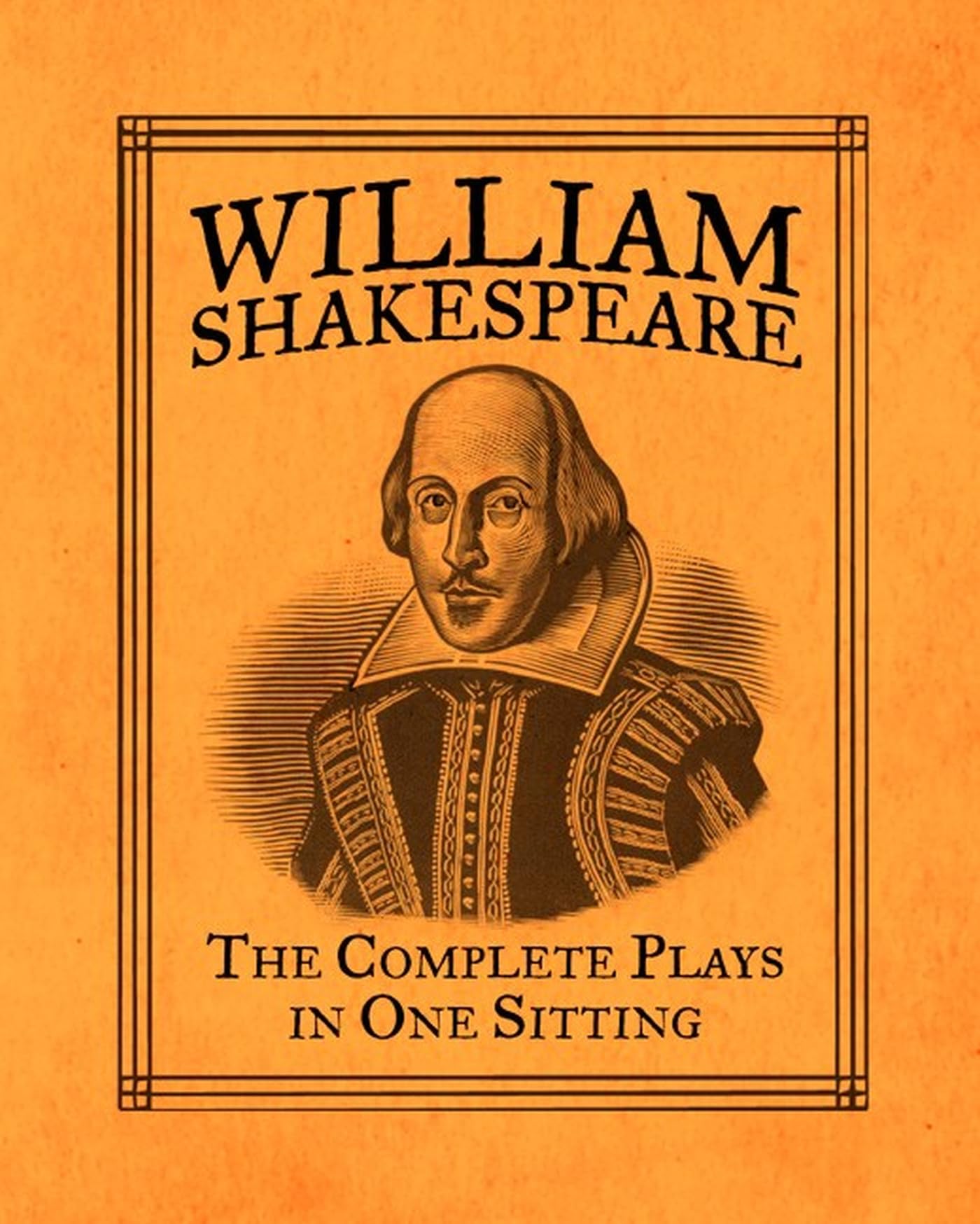
Having just read the Dickens one of these, I thought as I looked for something to take me up to Christmas that I may as well read this next to finish off the little group of this series I’d bought years ago.
Again it worked well, gave the opening line, the major characters, and a high level plot for each play, and an “iconic line” from some of them.
Only a few things let it down: a few typos in the last third or so of the book, Boleyn being spelt incorrectly each time it was printed, and while at the beginning the character descriptions were helpful, telling you how they related to the plot and each other, the more the book went on, the more it just sort of gave you their vibe, without explaining anything useful.
But it’s a good little reference group to get the basic premise of each play!
Many years ago I read the War and Peace book from this series, little books that fit in your hand, and just give you a high level overview – perfect for things I know I’ll never read properly!
Most books start with a quote, list the main characters with a sentence about them, and then a summary of the plot, very easy to work through!
There were a few stories I’d seen on film/TV, and they were easier to fly through, but it also got me interested to watch a few more that I’ve not seen before. A lot of them were much darker than I expected!
There are a whole load of these available, I have the Shakespeare one on my shelf, which is the one I actually bought first, but have been a bit more daunted by, so I guess that’s one to try in 2025!
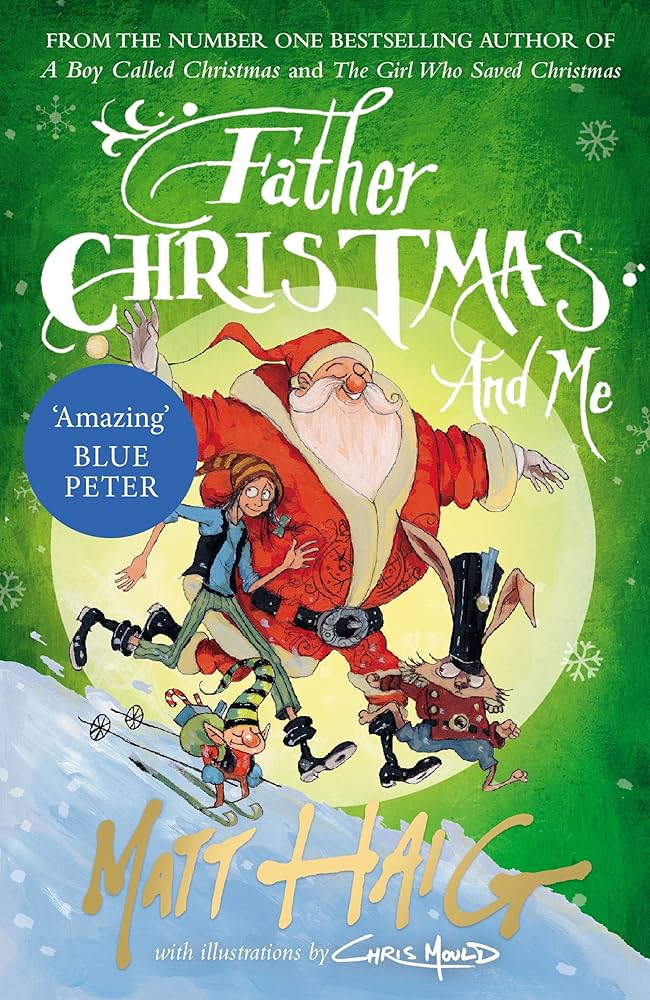
The final book in the trilogy, picking up from where we left off at the end of book two, when Amelia ended up coming to live with Father Christmas. She’s now attending school with the elf children, and struggling to get to grips with their subjects (elf maths is VERY different, eg: 2+2=snow, or a feather duvet), and she just doesn’t feel like she fits in.
There follows an accident with a sleigh, an elf that hates humans and spreads fake news about them in a very Trumpian fashion (this book was published in 2017, and you can tell!), and a warren full of rabbits, led by the Easter bunny – standard kids Christmas stuff, right?!
One problem that made me chuckle is that money in Elfhelm is chocolate coins, and when Father Christmas goes to withdraw money to cover the damages from the sleigh accident, it turns out that he has very few savings left as he ate it all… oops! And there is a point where our heroes are at great risk of being drowned in chocolate, what a pickle!
I’ll leave you with a line I thought was just beautiful: “Books and trees are the same thing. My aunt used to tell me that books are just trees that are having a dream.”
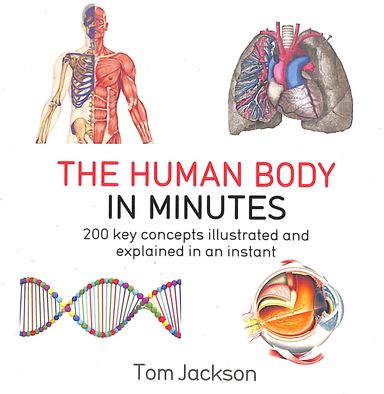
A marked improvement on the world history version, this was more science-y which is my cup of tea, and less assumed knowledge which is where the other one fell down for me. It still had a few typos, which makes sense given it’s the same series of books, but a different author at least improved the other issues.
It’s a page per thing, and covers all sorts of levels too, so right down to individual types of cell, up to whole systems across the body, and at the end, cloning, and death – so most things you’ll want to know about will be in here, it’s all just brief, which is what I wanted. Most double page spreads are a page with a couple of paragraphs on the left, and a diagram on the right. Good for an overview.
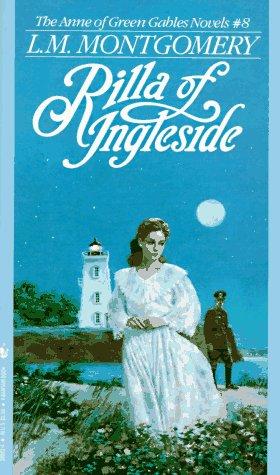
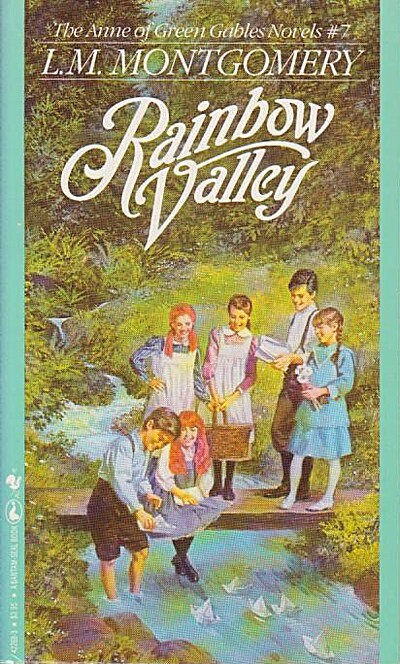
The final book in the Anne of Green Gables series, this felt quite different to the rest, in that it’s set from the eve to the end of the First World War. Like the previous book, while Anne is still in this, the focus is not on her, this time we’re mainly following Rilla, her youngest daughter, who is now 15 – she wasn’t in Rainbow Valley much as she was too young to play out with the older children, and so they are young adults.
When war starts, the oldest Blythe and Meredith boys enlist, and as time passes, some of the others get old enough to head off too, leaving behind the young women, some of whom have become sweethearts. Early on, Rilla, who ’til now has been rather self-involved, comes across a newborn baby whose mother has died, and whose father is away at war, and so she takes him in to raise herself, which obviously comes with its challenges.
I found it really interesting that a man in the village who is somewhat pro-German is referred to as a pacifist. He’s obviously seen as an awful person, but to me, pacifist is something really quite different!
It’s a book that have a real heaviness to it, but still has it’s moments of levity (and yet more Methodist bashing!), I really loved this book, and watching Rilla grow.
And now as I’ve finished the series I’m just sad that there are no more books for me to discover. I’ve enjoyed the characters of this series so much, Anne is obviously the main body of the stories, and even though these last two haven’t been about her so much, the books are still as wonderful.
As per usual, some quotes I noted:
“Why couldn’t they have called her by her first name, Bertha, which was beautiful and dignified, instead of that silly “Rilla”?”
“Some calls are visits, and some are visitations, […] dear.”
“He is […] very nice and clever, and would be quite handsome if it were not for his nose. It is a really dreadful nose.”
“I don’t wonder babies always cry when they wake up in the night. Everything presses on my soul then and no cloud has a silver lining.”
“We are told to love our enemies, Susan” said the doctor solemnly. “Yes, our enemies, but not King George’s enemies, doctor dear.”
“I used to hate Methodists, […] but I don’t hate them now. There is no sense in hating Methodists when there is a Kaiser or a Hindenburg in the world.”
“”Do you know, Mrs Blythe […] what I would like to do to the Kaiser if I could? […] I would like to turn the Kaiser into a good man – a very good man – all at once, if I could. That is what I would do. Don’t you think, Mrs Blythe, that would be the worstest punishment of all?” […] He would understand how dreadful the things he has done are and he would feel so terrible about it that he would be more unhappy and miserable than he could ever be in any other way. He would feel just awful – and he would go on feeling like that forever.”
“If the Almighty had meant us to fly he would have provided us with wings.”
“Some men, I am told, consider a little preliminary courting the proper thing before a proposal, if only to give fair warning of their intentions.”
“Compared with Germans, even Methodists seem attractive to me.”
“There is nothing like acting sensibly in an emergency.”
“I am going to take a honeymoon to celebrate the peace.” “A honeymoon, Susan?” “Yes, […] I shall never be able to get a husband, but I am not going to be cheated out of everything and a honeymoon I intend to have.”
Gosh, over five years since I finished the main section of Anne of Green Gables books, I recently found the last two books which focus more on her children in a charity shop for 50p each, so it’s time to properly finish the series!
Anne is in this book occasionally, and when she does pop up, is still her wonderful self, but the focus is more on the Meredith family, which is the town’s new widowed minister and his four children, who are the same age as Anne’s four oldest children, and make firm friends with them, as well as a girl called Mary who they find hiding in their barn having run away and not eaten for days. Mary is taken in by the Meredith children (or the “manse” children), and with their father so deeply engrossed in his work, he doesn’t even notice for days! The book follows the various escapades of the children, as well as the impact on their father.
A couple of things really tickled me: first was the absolute hatred the author seems to have for Methodists – there are so many throwaway comments from various characters in the book despairing of them, for no given reason! For example: “Fortunately, all the people the Merediths have offended so far are Methodists.” Secondly there’s a key character in the book called Rosemary West – how was L M Montgomery to know that many years later there’d be a famous serial killer with this name!
Another thing that seems bizarre reading it over 100 years after it was published, is the absolute horror the characters recoil with when someone dares to say the word “darn”, and then the n word is totally permissable!
Right at the end of the book there’s a bit of foreshadowing of the coming First World War, which I believe is the setting for the next and final book which I intend to dive straight into now I’ve finished this one, but first, here are some of the lines from the book that made me turn down page corners:
“A manse cat should at least look respectable, in my opinion, whatever he really is. But I never saw such a rakish-looking beast. And he walks along the ridgepole of the manse almost every evening at sunset, Mrs Dr dear, and waves his tail, and that is not becoming.”
“I’ve always thought graveyards must be delightful places to play in.”
“A handsome rooster like Adam is just as nice a pet or a dog or cat, I think. If he was a canary nobody would wonder. […] I never liked dolls and cats. Cats are too sneaky and dolls are dead.“
“Oh, father only said that in the pulpit, he has more sense than to really think it outside.”
“Your wife never had a new hat for ten years – no wonder she died.”
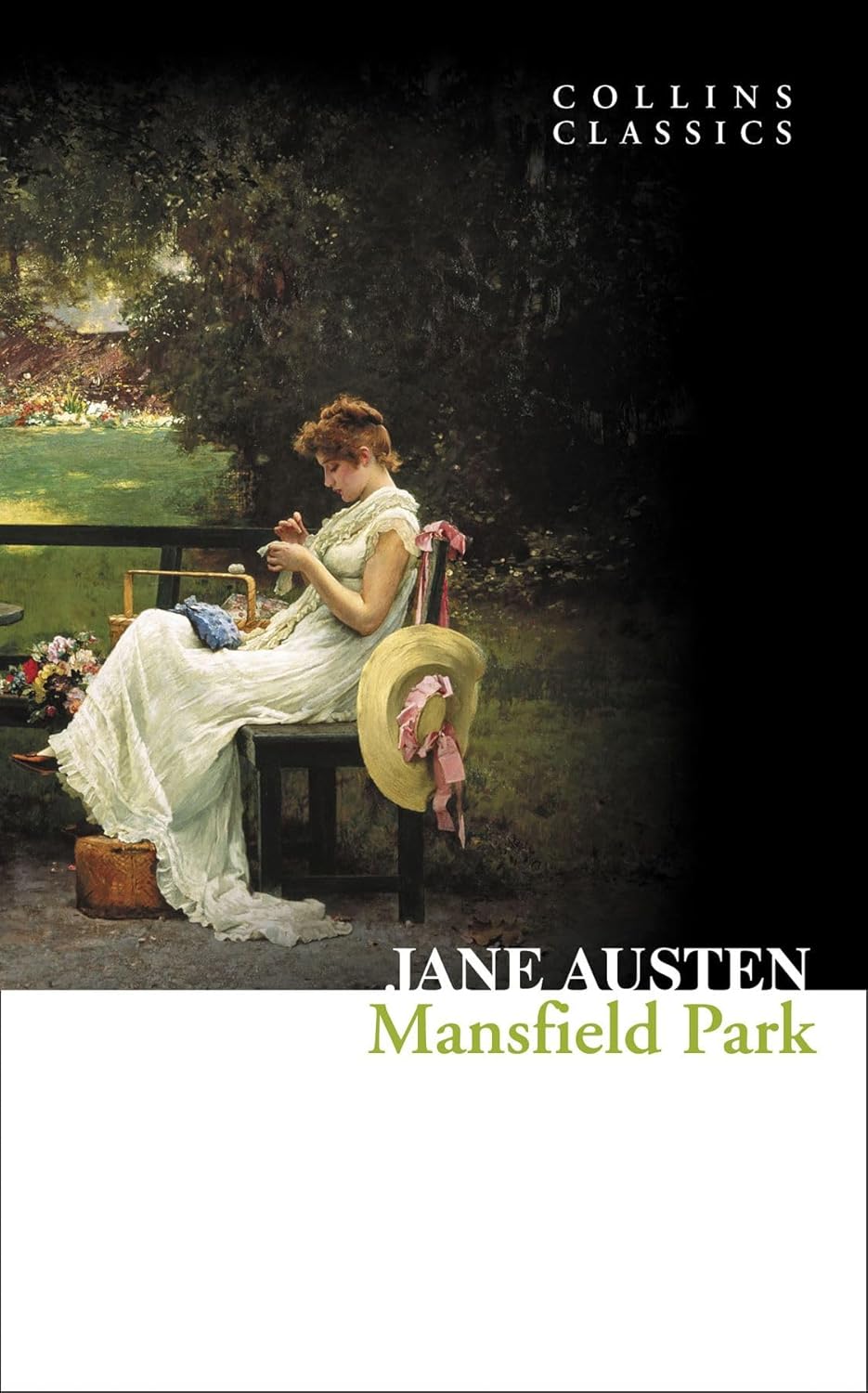
The final one (just in the order I’ve read them!) of the six completed books completed by Austen, and I really loved it! I really warmed to Fanny Price more than I have when watching film adaptations. I’m most familiar with the 1999 film for which I can only find this trailer, which makes it seem far more American than it is! But the book has so much more to it, which is standard, and some things that just happened completely differently.
Fanny is originally from Portsmouth, in a family with not a lot of money, but age 10 is sent to live with her wealthy relatives in Mansfield Park, and the majority of the book takes place when she’s maybe 18ish, so has spent a good chunk of her life there. Because of this, there are some negative comments about Portsmouth in the book, which I couldn’t help but enjoy!
“Her daughters were very much confined; Portsmouth was a very sad place; they did not often get out.”
“How her heart swelled with joy and gratitude as she passed the barriers [out] of Portsmouth.”
Of course, Austen lived a long time ago, and so you do have to get over various cultural norms of the time, not least of which is cousins getting married being completely normal: “It began to strike him […] whether it might not be possible, an hopeful undertaking to persuade her that her warm and sisterly regard for him would be foundation enough for wedded love.”
It took me a long time, as these books tend to do, but the further I got through it, the more I was finding moments to read a few more pages, I really enjoyed it.
Some other bits that made me fold down page corners:
“Selfishness must always be forgiven, you know, because there is no hope of a cure.”
“You seemed almost as fearful of notice and praise as other women were of neglect.”
“She does not think evil, but she speaks it, speaks it in playfulness; and thought I know it to be playfulness, it grieves me to the soul.”
“I had thought you peculiarly free from wilfulness of temper, self-conceit, and every tendency to that independence of spirit which prevails so much in modern days, even in young women, and which in young women is offensive and disgusting beyond all common offence.”
“Let him have all the perfections in the world, I think it ought not to be set down as certain, that a man must be acceptable to every woman he may happen to like himself.”
 ineke.co.uk