Things people have accidentally conditioned their pets to do.

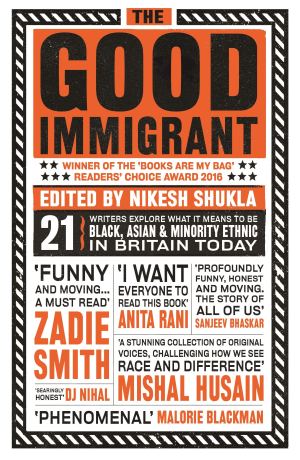
Never in my life did I think I’d choose to read an essay collection; but when the focus/intention is something so important, the tone is relatively auto-biographical, and the reviews are so strong, it seemed worth giving it a go.
I think what surprised me most about this book (though of course it shouldn’t have) was the variety. As “21 writers explore what it means to be black, Asian & minority ethnic in Britain today”, not once did I think it was getting repetitive. The contributors are from all sorts of backgrounds, cultures, ethnicities [which, interestingly, spell-check doesn’t recognise as a word?!]. Some are UK born, some immigrated, and they talk about different things, some more on a specific topic, some more just telling their story. It gives a great insight into a world that those of us with white privilege just haven’t experienced.
At the start of the book there is a mini-bio for each author (and their twitter handle), but then it just dives right in, the first essay being from Shukla, and going on from there.
To give a flavour of what sort of things the book covers, I’ve put some example paragraphs and sentences below:
– Riz Ahmed
There’s also sections on: Visiting ones country of heritage and not fitting in their either, stereotypes of different African countries inspired by the hashtag #IfAfricaWasABar, and much else besides.
Definitely a good book for exposing us to what life is really like out there.
All the Argos catalogues – ever!
Things people were in before they were famous.
Things we never realised we were doing for the last time.

Accidental science experiments.
Purposes of random little things.
Potential recipe for Dominos garlic & herb dip.
Live music around the world post-lockdown.
Speech pathologist teaches her dog to communicate with word buttons.
Needed a bit of light relief after my last read! I think I picked this up in The Works for a couple of quid forever ago, and over lockdown she’s been reading through it on her instagram for folk, and I thought I may as well get it read!
The subtitle for the book says it’s an autobiography, but in reality, it’s somewhere halfway between that and a self-help book. Nice short bite size chapters about all sorts of things from her life (chapters range from “Things I’ve been bullied for”, to “My favourite room in the house”, and everything inbetween), the majority ending with “how to be champion” tips. As you’d expect from a comedian, it’s a funny book, but she’s also done amazing work including #joinin and Standard Issue.
Some of my favourite quotes are below:

Millionaires ask governments to tax them more to support COVID19 costs.
Historical things people have found in their houses.
Why our eyes are crazy clever!
Games to play during an online Christian conference.

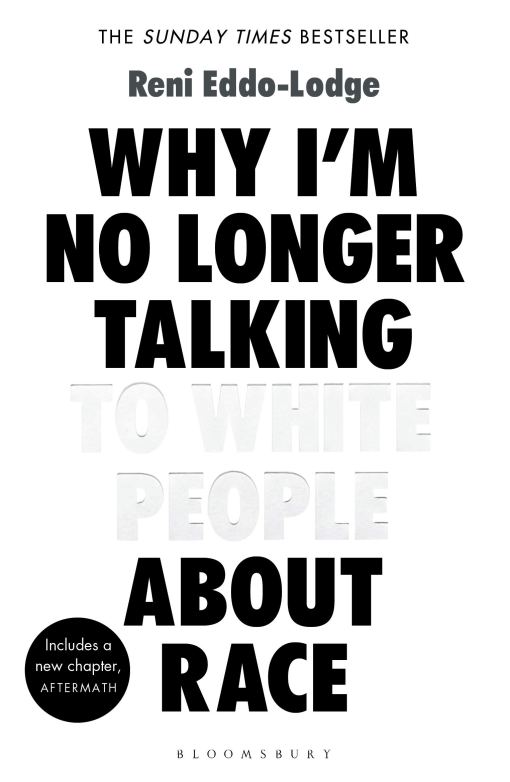
I’m only one of many many people who have bought this book this summer after George Floyd’s death – there were recommendations for it everywhere. The author herself has said she doesn’t “like the idea of personally profiting each time a video of a black person’s death goes viral”, and so asked people to get it from libraries and/or donate to the Minnesota Freedom Fund along with their purchase. This spike in purchases made her the first black British person to top the paperback non-fiction chart in the UK, something which she responded to, saying, “The fact that it’s 2020 and I’m the first… is a horrible indictment of the publishing industry”. I’ve become acutely aware over the last month or two of how white-based my British history education was at school, and how pretty much everything we learnt about our history was in a positive light. So this was a book I wanted to pick up.
Eddo-Lodge wrote a blog article in 2014 which had the same title of this book which was published three years later, and the post is included in the book’s preface. The gist of the sentiment behind the title is that most (not all) white people won’t admit there’s a problem, and won’t listen to engage further in that. I’ve noticed that a lot of people will tell you that while we may have a problem with race in this country, America is much worse, and leave it at that. (As an aside, when looking for books to read on this subject, I had to go into the blurbs to work out if the books were USA or UK based as they’ve give very different backgrounds, and for now I’m wanting to learn more about my country!)
The book is divided into seven chapters (and an eighth in editions printed after 2018). Below I’ve put key points and/or thoughts and/or summaries and/or quotes from each chapter. It was a really helpful book if you want to educate yourself more in this area.
But the focus of the chapter is on how race and class are intertwined: the proportions of people of colour are much higher at the bottom of this scale than at the top, and therefore more likely to be living in poverty. She discusses how the gentrification of poorer areas in London forces poorer folk out, and because of the proportions, therefore people of colour out. As well as the gender pay gap, there’s also an ethnicity pay gap.
“There is a suspicion laid at the feet of people who aren’t white who succeed outside of their designated fields for black people, those fields are singing and sport.”
John Krasinki’s hair/wig in the office.
Time signature quiz. (I got 7/11!)
Cello bench (or guitar bench).
Weird things we learnt at Junior School.



 ineke.co.uk