Answer accent/dialect questions and they’ll guess where in the UK you’re from.
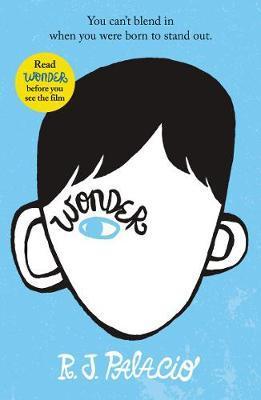
From the back cover of the book:
“My name is August.
I won’t describe what I look like.
Whatever you’re thinking,
it’s probably worse.”
August was born with a combination of genetic abnormalities which mean he has a face rather unlike other peoples. He’s 10 years old, and about to go to school for the first time having been home schooled so far. Not something that would be easy for any kid, let alone August. Obviously it’s a tough year, kids can be cruel, we know, and there is no exception here, but some kids can also be completely wonderful.
For the first chunk of the book, August is the narrator, sharing his story of that year, but as we go through, others including his sister and his friends get to share from their perspective, which is really important – they might overlap a little to explain how they got to a point, but then take you on further through events.
Much as there are some truly awful moments, this book is incredibly uplifting. I read the majority of the book in just two days – completely insane. Though I will say that the chapters are REALLY short, so often you do have half blank pages which I guess must have sped me up a bit, but truly I couldn’t put it down – I read for 90min straight this evening without falling asleep – unheard of!
And yes, I will be trying out the film soon!
This book ticks a couple of my categories lately: books I see everywhere and so give in and buy, and books set in world war two!
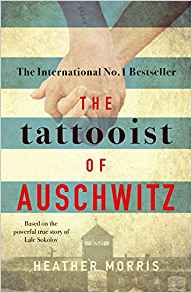
The tattooist of Auschwitz is Lale (this is a true story, he really existed), a Slovakian Jew who ends up in Auschwitz and Birkenau as a prisoner. All the prisoners have jobs within the concentration camp and Lale manages to get a job tattooing all the prisoners numbers onto their arms as they arrive, a job that comes with a bit better treatment than the labouring that most do.
At its heart this book is a love story between him and a girl he meets as he tattoos her on her arrival, intertwined with the horror of life in a concentration camp. What really highlighted itself to me was just how trigger happy the guards were, the slightest thing and you could be shot dead – some even just while they popped to the loo in the middle of the night – horrifying.
One thing that really struck me with this book was only a tiny thing really, but I kept stumbling each time I picked it up to read some more and re-remembered that it’s all written in present tense – a little strange, but I got used to it by the second half!
I was always “good at maths.” At school, through til A Level’s it came to me easier than most other subjects, and I hugely enjoyed it – it wasn’t until university that it felt like a completely different subject that I just had no ability to do! I kinda assumed I’d just reached my limit, or I was an anomaly who just couldn’t handle the switch from working stuff out to proving stuff.
But on the way home tonight, I listened to this week’s Infinite Monkey Cage episode/podcast called “The Origin of Numbers.” During the last ten minutes or so, they said the following:
“I don’t know a single mathematician who’d say they were good at mental arithmetic.”
And it was like a revelation – I can do all the number bits, just the theory that I find hard. They talk about there being a distinction between numbers and mathematics.
They also talk about a condition called dyscalculia which they thought many mathematicians actually have, which is where you have problems with arithmetic. I feel like maybe I had the opposite to that!
So maybe, after all those years in education, I never was “good at maths”, I was good at numbers! I wonder if that explains why I am so into data, spreadsheets, processing, rather than any inclination at all to carry on in academia.
If you’re at all into maths or numbers, it’s a very interesting listen – go ahead!
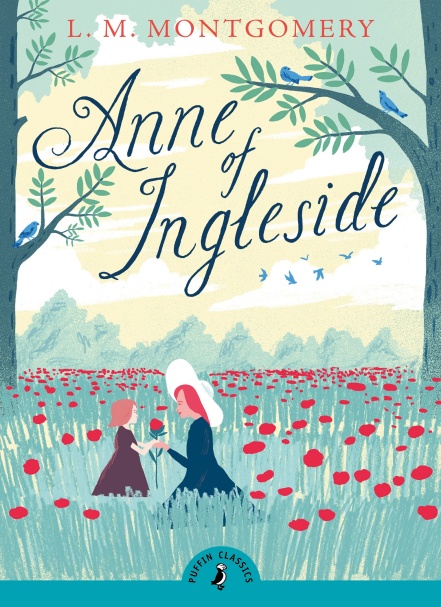
After two years, I’ve finally finished the main part of this series of books! There are two more that follow, but their focus is on the children, no more “Anne of….”, so I sort of consider this a job done!
That said, even thought this is an “Anne of” book, the focus really is on the children – Anne and Gilbert have six children including a set of twins, all with their different escapades, and not a huge amount of time spent on Anne other than when the children take their problems to her to solve. For the most of the book, Anne has become a flawless woman with her days of escapades and learning about herself long gone – but there is a really nice moment near the end where we find she’s not perfect after all, and she struggles with something so completely relatable to us all, it’s nice to see she’s still got a realistic side to her.
Still very enjoyable, warm and fuzzy, and an easy read.
As with the previous books, this one still has some lovely one liners – here are a few of my favourites:


 ineke.co.uk