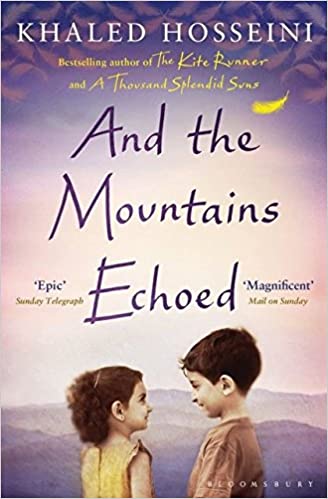
Why I’m no longer talking to white people about race – by Reni Eddo-Lodge

12 07 2020

I’m only one of many many people who have bought this book this summer after George Floyd’s death – there were recommendations for it everywhere. The author herself has said she doesn’t “like the idea of personally profiting each time a video of a black person’s death goes viral”, and so asked people to get it from libraries and/or donate to the Minnesota Freedom Fund along with their purchase. This spike in purchases made her the first black British person to top the paperback non-fiction chart in the UK, something which she responded to, saying, “The fact that it’s 2020 and I’m the first… is a horrible indictment of the publishing industry”. I’ve become acutely aware over the last month or two of how white-based my British history education was at school, and how pretty much everything we learnt about our history was in a positive light. So this was a book I wanted to pick up.

Eddo-Lodge wrote a blog article in 2014 which had the same title of this book which was published three years later, and the post is included in the book’s preface. The gist of the sentiment behind the title is that most (not all) white people won’t admit there’s a problem, and won’t listen to engage further in that. I’ve noticed that a lot of people will tell you that while we may have a problem with race in this country, America is much worse, and leave it at that. (As an aside, when looking for books to read on this subject, I had to go into the blurbs to work out if the books were USA or UK based as they’ve give very different backgrounds, and for now I’m wanting to learn more about my country!)

The book is divided into seven chapters (and an eighth in editions printed after 2018). Below I’ve put key points and/or thoughts and/or summaries and/or quotes from each chapter. It was a really helpful book if you want to educate yourself more in this area.

  1. Histories
    A broad sweep of black British history (presumably kept high level as there was so much else she wanted to fit into the book!). It goes back as far as the slave trade and as recent as the London riots, and the vote to leave the EU. (Grenfell happened two weeks after the book was published, and is mentioned in the additional eighth chapter). This is what I feel highly uneducated in and want to learn more of (I’ve bought a couple of other books which I imagine may have a similar outline, so if anyone’s read anything that gives a fairly accessible history of Britain and the colonies, I’d be interested in recommendations).
  2. The System
    The chapters starts with the story of Steven Lawrence. Growing up I was aware of the name Steven Lawrence, and had a rough idea that he was a black boy that was killed, but didn’t know much beyond that. We hear here how his family had to battle and battle to get justice, and how it was nineteen years until anyone was convicted for his murder.
    It then looks at the flaws in our systems, for example the discrimination found when applying for jobs. There’s a great example of when the NFL were required to interview at least one Black of Minority Ethnic candidate for any management position, not to recruit, just to interview, and doing that alone meant that panels saw candidates they may not have otherwise considered, and over the next decade, 12 new black coaches were appointed.
    It also covers the failings in the concept of colour-blindness. “White children are taught not to ‘see’ race, whereas children of colour are taught […] that we must work twice as hard as our white counterparts if we wish to succeed.”
  3. What is White Privilege?
    She describes White Privilege as an absence of the negative consequences of racism, and explains that what some would describe as reverse-racism is just prejudice. The difference between racism and prejudice is that racism is prejudice plus power. She also speaks to a mixed race woman who was brought up without race ever being discussed and how that affected her.
  4. Fear of a Black Planet
    A lot of this chapter focuses on the fear of immigration. She goes for Nick Griffin, and then, because of British defamation laws, gives him a chance to go back, and so rang him. To quote her introduction to the interview: “Our conversation was so surreal that I publish it here in full.” It’s worth a read.
    Later in the chapter in relation to Katie Hopkins: “Freedom of speech means the freedom for opinions on race to clash. Freedom of speech doesn’t mean the right to say what you want without rebuttal, and racist speech and ideas need to be healthily challenged in the public sphere.”
    She also discusses the tendency towards white heroes and black baddies in film and television, and the uproar that came when in the stage show “Harry Potter and the Cursed Child” when the role of Hermione was given to a black actress.
  5. The Feminism Questions
    The focus of this chapter is the overwhelming whiteness of the feminism movement, and the concept of intersectionality which is the crossover of two discriminations, racism and sexism.
  6. Race and Class
    I found this chapter really interesting. Traditionally the UK has had three classes: Upper, Middle (paid monthly and own your home), and Working (paid by the hour and rent your home). But in 2013 the Great British Class survey was commissioned by the BBC and discovered that we now have seven classes (which I put here for just general interest!):

    1. The elite
      Wealthiest and scoring highest economically, socially and culturally
    2. The established middle class
      Next wealthiest and love culture
    3. The technical middle class
      Have money but not very social
    4. New affluent workers
      Middle income, but high on socialising and culture
    5. Traditional working class
      On average, the oldest class
    6. Emergent service workers
      Lower in financial security
    7. The precariat
      The most deprived group

    But the focus of the chapter is on how race and class are intertwined: the proportions of people of colour are much higher at the bottom of this scale than at the top, and therefore more likely to be living in poverty. She discusses how the gentrification of poorer areas in London forces poorer folk out, and because of the proportions, therefore people of colour out. As well as the gender pay gap, there’s also an ethnicity pay gap.
    “There is a suspicion laid at the feet of people who aren’t white who succeed outside of their designated fields for black people, those fields are singing and sport.”

  7. There’s No Justice, There’s Just Us
    This chapter wraps up the original book. White people are wondering when there will be an end point to all this, but she says racism will be with us for a long time, any change is incremental – it’s gonna be a long haul.
    “The perverse thing about our current racial structure is that it has always fallen on the shoulders of those at the bottom to change it. Yet racism is a white problem.”
    “I don’t want white guilt. […] No useful movements for change have ever spring out of fervent guilt. […] Support those in the struggle, rather than spending too much time pitying yourself.”
    “If you are disgusted by what you see, and if you feel the fire coursing through your veins, then it’s up to you. […] It can be as small scale as chipping away at the warped power relations in your workplace. It can be passing on knowledge and skills to those who wouldn’t access them otherwise. It can be creative. It can be informal. […] It doesn’t matter what it is, as long as you’re doing something.”
  8. Aftermath
    This chapter was added a year or two later, and covers the rise of anti-immigrant politics, and how so many things written about in the previous chapters had progressed since publication, and how the conversation has become so much more centre stage – and this is still long before the events of 2020!


Internet highlights – w/c 5th July 2020

11 07 2020

A few life hacks.

John Krasinki’s hair/wig in the office.

Time signature quiz. (I got 7/11!)

Cello bench (or guitar bench).

Weird things we learnt at Junior School.

Read the rest of this entry »


Internet highlights – w/c 28th June 2020

4 07 2020

New Lou Clark short story from Jojo Moyes.

The late 90s were weird.

When kids TV shows handled difficult topics.

Many ways that Mamma Mia 2 contradicts Mamma Mia.

Read the rest of this entry »


Internet highlights – w/c 21st June 2020

27 06 2020

Stupid things people have said and done.

Bible data visualisations.

Read the rest of this entry »


The Ballad of Songbirds and Snakes – by Suzanne Collins

25 06 2020

When a trilogy has been such a huge hit as The Hunger Games was, both as books and films, then a prequel published a decade later is going to be one of two things – excellent like the originals because the author has waited until they have a good story, or awful and they’ve just written it for the cash. I would say this falls into the former category – I really enjoyed reading this!

It’s set about 65 years before the original books, with President Snow an 18 year old in his final year of school, and following the tenth annual Hunger Games competition. The event is far more primitive than the high tech entertainment we were familiar with in the original books, and is just run in an amphitheatre with a few weapons lying around, though the same revolting basic rule still governs it – last alive wins.

Ten years of the games means it’s ten years since the war, and as yet folk haven’t really got into following the games which were created to remind the Districts who is in charge. The Head Gamesmaker is looking for ways to engage both those in the Capitol and in the Districts more, one way they do this is to have final year students in the Capitol mentor a tribute each, and this is where Snow comes in, mentoring the female tribute from District 12. His family has fallen on hard times since the war, but is trying to keep it quiet for the sake of their position in society, and a good result in the games could get Snow a University scholarship to secure his future.

I won’t give anything away, but even at over 500 pages I flew through it! I have one issue with Snow’s character that I’d like to discuss with anyone who’s read it, but won’t leave spoilers here!! But essentially, if you enjoyed the original books, I think you’ll like this.


Internet highlighhts – w/c 14th June 2020

20 06 2020

Things that are unfortunate.

Mean designs.

Read the rest of this entry »


The Color Purple – by Alice Walker

14 06 2020

One of the key things I’ve got out of the BLM awareness the last couple of weeks is the need to educate ourselves better. There have been various books recommended, and this was on a fiction list I saw early on (which I can’t find anymore), and it had been sat on my shelf for a long time, and so it seemed a very sensible time to pick it up.

The book is written as letters, initially from the main character, Celie, to God, (though later on this varies a bit and includes letters to and from her sister). Through these letters she essentially tells us the story of her life as a black woman in the American Deep South between the world wars, and of those around her.

It’s not been the easiest book to read, but for a broad variety of reasons:

  • Because she’s talking to God, there’s a lot of assumed knowledge! She talks about people without explaining who they are, and it takes a fair bit of focus to work out what she’s on about at times, particularly at the beginning when everyone she talks about it new to you.
  • No quote marks for dialogue!
  • When Celie is writing (so, for most of the book), it’s written in the dialect she spoke in, the author has referred to this as “black folk language.” It very quickly becomes normal, but was a bit of an adjustment at the start.
  • Time seems to move along without explicitly telling us. By the end of the book I’d say 30-40 years have passed, but it’s not at all easy to see this happen. Someone might refer to how they now have three more children than when you last saw them, or that someone you thought was a kid is nearly as tall as the adults. Hard to keep track of so I just sort of let it happen!
    A quote which just felt so true of life, especially right now: “Time moves slowly, but passes quickly.”
  • Finally, some of the actual content is upsetting, and could be triggering for some. On page one alone, Celie, aged 14 is violently raped by her Pa.


Internet highlights – w/c 7th June 2020

13 06 2020

Weird things about the British.

Read the rest of this entry »


Internet highlights – w/c 31st May 2020

6 06 2020

I’ve split this into two halves this week. There’s a lot of very serious stuff going on, and there’s a lot of silly internet stuff out there. It feels like too much of an roller-coaster and too emotionally confusing to yo-yo between them, so all the stuff relating to the George Floyd situation (directly or indirectly) comes first, followed by all the regular nonsense (some of which is also serious, but still feels like it should be kept separate).

For me, the biggest thing to come out of all the below is the need for us to educate ourselves better. There are books and things suggested, and I am definitely going to be looking for some, but I feel like even reading and watching these posts has been an eye-opener.


An explanation of white privilege.

https://twitter.com/rgay/status/1267834401259319296

https://twitter.com/jambotodd/status/1269020091997396992

https://www.instagram.com/p/CA4SMFjnQ16/

https://www.instagram.com/p/CAx3sYTpAL_/

https://www.instagram.com/p/CA_xLyjFAfw/

https://www.instagram.com/p/CA7Oz3rB2i4/

https://www.instagram.com/p/CBDqHVcHVVw/


https://twitter.com/andymilonakis/status/1266821069823975430

https://twitter.com/MikeH_PR/status/1267499513855594497

https://twitter.com/hughbon/status/1268866121861681154

https://twitter.com/SixShooter64/status/1268662135749402625

https://twitter.com/matthaig1/status/1267012110770417664

https://twitter.com/RibottoStudios/status/1264712183616663554


Little Fires Everywhere – by Celeste Ng

2 06 2020

Yes it’s another of those books that’s been everywhere and then adapted for TV. But my theory is, there’s got to be a reason it’s been everywhere and that someone’s put money into making a screen adaptation. It’s gotta be good.

The Richardsons live in an overly planned suburb of picture perfect houses where everyone seems to live picture perfect lives. Mia and her daughter Pearl arrive to rent a small home owned by the Richardsons, having moved house every few months of Pearl’s life and don’t quite fit in with the ideal, but Pearl quickly forms friendships with the Richardson children.

The book starts with a rather dramatic incident, and then flashes back a year to show us how things got to that point. There are back-stories to be discovered, one of which takes a good 50 pages to tell when we finally get to it!

It’s set in the late 90s, which gave some lovely nostalgic moments.

It turns out, yes there is always a reason books go viral (is that a thing? books going viral? oh well, you know what I mean), because it’s a story that grabs you and keeps you interested.