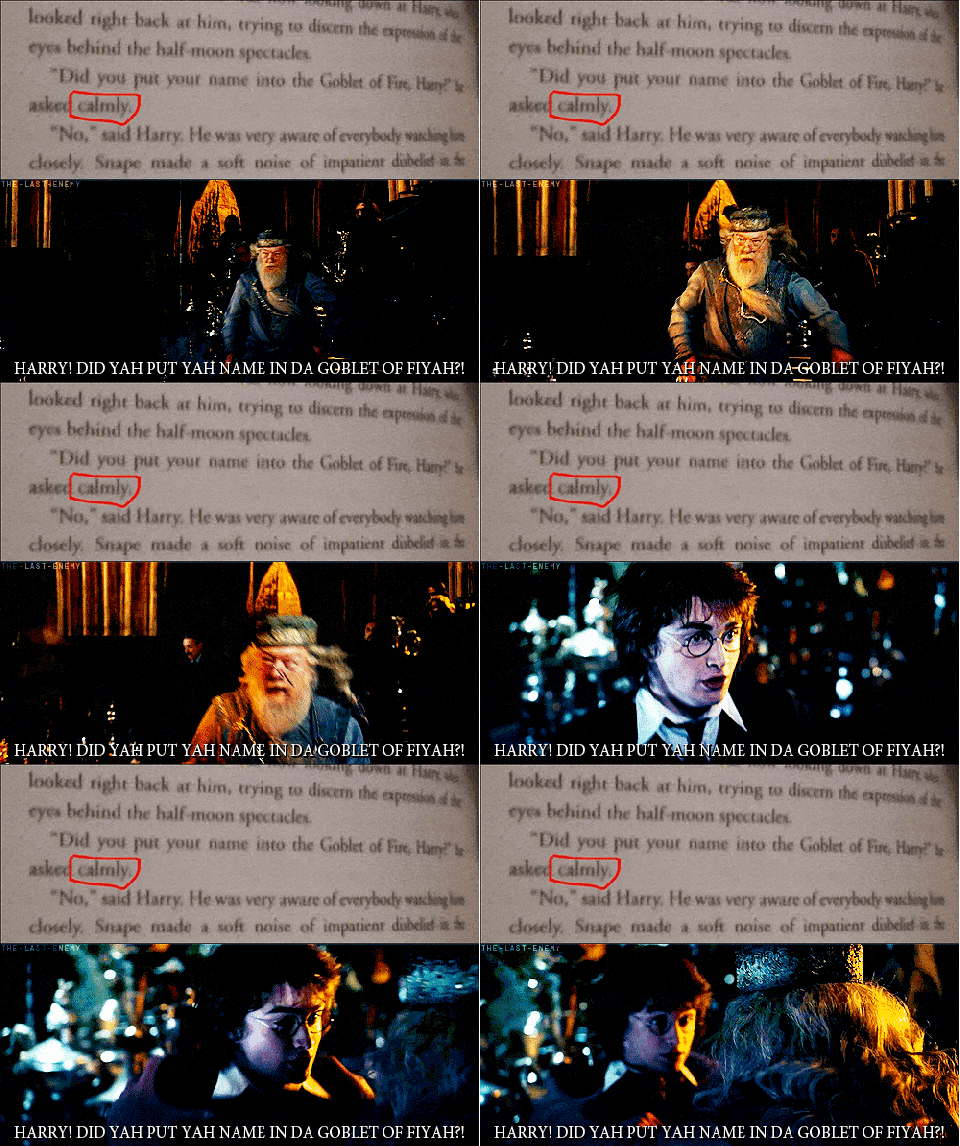
People who did the job a little too literally.
Awkward things British people do.

The Queen wore green for her broadcast, so of course the photoshoppers got on it.
House uses fairy lights to celebrate the NHS.
The problem with cats when working from home.
A story about a whale carcass, dynamite, and how this relates to Coronavirus.
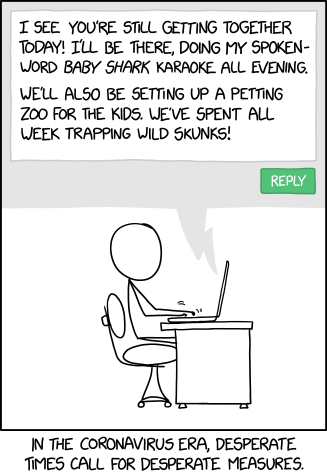
Films & TV Shows that predicted the future.

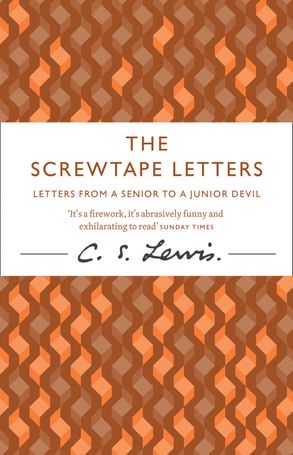
Many years ago I got my Grandpa’s very old copy (I think late 1950s, early 1960s?) of this book, which obviously was rather delicate and fragile, so I have kept it safely in a box ever since. A few years later I got the C.S. Lewis Signature Box Set which had a much more robust copy as part of it, and a few years after that, I’ve finally got around to reading it!
The book is a collection of letters from Screwtape (a senior devil) to his nephew Wormwood (a junior devil) – we can clearly tell that there are replies between, but we’re not privy to those. Wormwood has been assigned a ‘patient’ and the letters contain advice, critique and general feedback about how he is doing, what he needs to do differently, and what opportunities to look for.
It’s a confusing read to start with to get your head around the terminology. As a Christian, the phrase “the enemy” would normally mean Satan, and “Our Father”, God, but in this book the roles are of course, reversed! It’s very cleverly written and ends up challenging you in all sorts of areas. There’s a hugely strong warning against luke-warmness, they are excited when the patient is starting to head in the wrong direction, but thinks things are OK so long as he is still a church-goer.
I occasionally found it hard to read, the sentences got quite long in places, and C.S. Lewis is a very clever man, so I think sometimes it was just a bit beyond me, but mostly it’s readable, the content is good and the premise is superb. Definitely worth a read.
At the back is a section which I believe was previously published separately, called “Screwtape proposes a toast”, which is a 20ish page speech that he gives at the graduation at The Tempters Training College for young Devils. It was written maybe 20 years later, and again had good content but was a bit hard going at times – good to see Screwtape in another setting though!
Some of my favourite quotes are below (and remember to bear in mind, these are all written from a devil’s perspective):
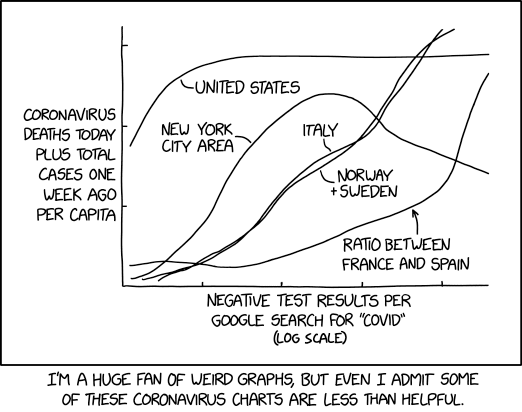
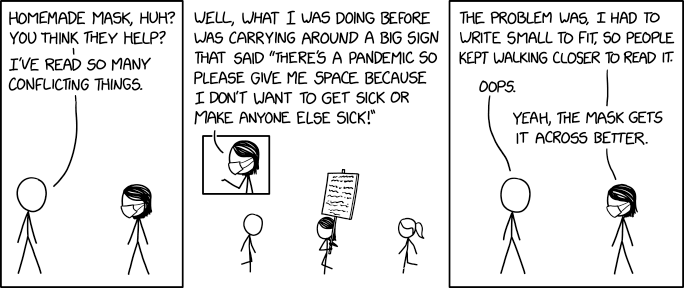
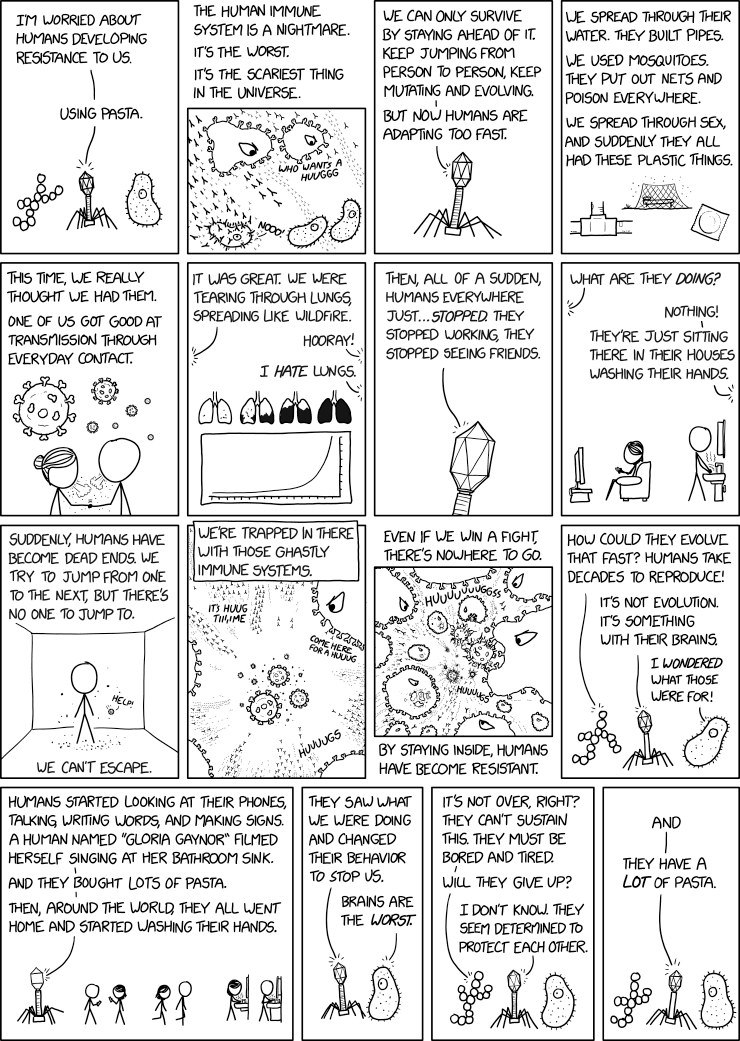
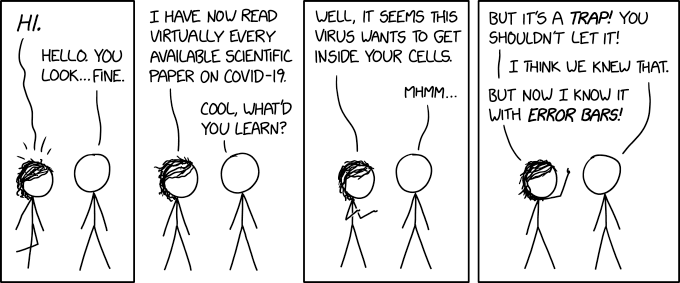
How to stop false information from going viral.
Famous artworks, adjusted for quarantine.
Formerly busy public spaces – empty.
A dad set up a whole treasure quest for his daughter when she asked about the door in the ceiling.
There were a lot of people on Twitter saying April Fools should be ‘cancelled’ this year.
My position on it is that as long as it’s kept light-hearted and harmless, then it’s a great distraction for us all. There’ve been all sorts of other jokes out there to keep spirits up, people don’t seem to take issue with any other form of comedy, and yet for some reason people have written off today – it’s a shame.
(I’m sure most people will disagree with me, that’s fine, we’re all allowed an opinion.)
Anyway, disappointingly it looks like nearly everyone has erred on the side of caution; this is all I’ve found:
Not great in quality or quantity, but respect to them for giving it a go!
Let’s hope that this time next year life is back to normal and we can enjoy this properly.
UPDATE: things found after the midday deadline
Ideas of things to clean and how to clean them if you’ve got time to kill!
Album covers redone to be social distancing appropriate.
Things that would have been weird a month ago.
The National Theatre are going to stream one free play per week.

This is the final book in this ‘Rosie’ trilogy about Don Tillman.
I’ve said it before and I’ll say it again, Don is just a really likeable character (possibly moreso because the books are written in the first person from his perspective). By this book he and Rosie have been married for over a decade and have a 10 year old son, Hudson. Don has a lot of things he’s learned about social interaction, rules and patterns to keep an eye out for to understand things he might otherwise struggle with.
Early in the book there’s a suggestion from the school that Hudson may be autistic and that they should look into having him tested. Don is not keen on this, but the comment has also been made about him. He leaves his job to focus on Hudson, to try and achieve various targets (numbered, of course) to help him to fit in.
A lot of the book questions autism stereotypes, as well as educating neurotypicals in ways they can better help those with autism feel comfortable – one being checking if their preference is to be referred to as ‘autistic’ or ‘person with autism’! There’s definitely a message in the book about how we always think of ‘unable to feel empathy’ as a symptom of autism, but rarely do neurotypical people have much empathy for them – definitely a few challenges thrown in, which is helpful.
I’ve made this sound like a heavy book, it’s not. It’s funny, warm, and interesting! There’s also a whole plot with Don opening a bar given his interest and skill in cocktail making – it’s an easy read, just has a good message to share along with it.

It’s a long and weird week, there’s been a lot of time on the internet and a lot of stuff on the internet, so sorry if this is a bit long! Obviously there’s a lot linked to Coronavirus, but I’ve tried to make sure the majority is humorous, or good advice, rather than miserable or stressful, though the occasional may have slipped in, sorry. Now you see why I do this consolidating in one place, rather than sharing and retweeting all this as the week goes!
Call to day of prayer and action on Sunday 22nd.
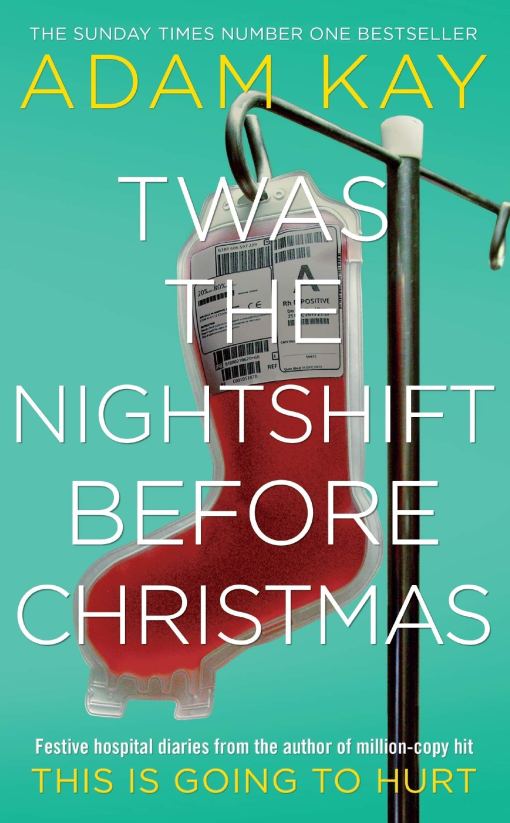
“This is Going to Hurt” has been an absolute sensation and after reading it in 2018, when I saw that a short (142 pages) Christmas follow-up was coming out I was very excited to read it. I got it for my dad for Christmas as his career was in the NHS and he’d also loved the first one, and I’ve now borrowed it back from him! (Thanks Dad!)
There isn’t much to add to what I said about the first book (if you haven’t read that, I would read that first, just for a bit more context), it’s just a great insight into the reality of life in the NHS, a few highs – mainly lows of course, but told in a humour that means it’s an entertaining read.
My favourite thing about this was a footnote in the introduction:
“In mt first book, “This is Going to Hurt”, the most common reasons for entries being omitted included ‘too disgusting’ or ‘too Christmassy’. Here I make amends for both.”
If that doesn’t make you want to read it – nothing will!

 ineke.co.uk