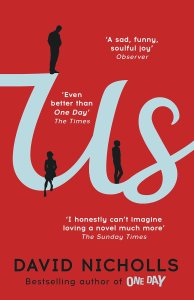
Having loved the idea and the story behind ‘One Day’ by David Nicholls, both book and film, the fact that The Times called this “Even better than One Day” meant I had to give it a go!
Early on in the book we hear Connie (an artist) tell Douglas (a scientist, and the narrator of the book) she thinks she wants to leave him when their son Albie goes to University in the autumn. From then on we follow two stories in parallel: How they met and reached that point, and from that point, how Douglas attempts to save their marriage and the respect of his son during a “Grand Tour” of Europe, seeing all the art galleries, that they already had planned.
The story from that point on mainly revolves around the difficult relationship between Douglas and Albie – Albie being a fairly hipster teenager, and his dad being a slightly awkward, boring and formal scientist. Made all the more difficult by the closeness that does exist between Connie and Albie. I won’t go much further with that as I don’t want to give too much away, but it’s told so well.
I found myself folding down corners of pages as I went when there was a sentence or phrase that I thought was particularly interesting or thought-provoking. I’ve checked them for spoilers and shared a few below:
“In short, my son makes me feel like his step-father.”
“I’ve got nothing against his dreams as long as they’re attainable.”, “But if they’re attainable then they’re not dreams!”
“It was a good joke, though perhaps not enough in itself to save our marriage.”
“Was it the happiest day of our lives? Probably not, if only because the truly happy days tend not to involve so much organisation, are rarely so public or so expensive.”
“The tourist’s paradox: how to find somewhere that’s free of people exactly like us.”
“But the trouble with living in the moment is that the moment passes.”
“The great virtue of defeat, once accepted, is that it at least allows one to rest. Hope had kept me awake for too long.”
Knowing that Nicholls doesn’t always write happy endings, I was fairly apprehensive for the last third of the book, but obviously I won’t tell you what happened!
Most people have seen the film Mary Poppins, but not many have read the book. However, last year I saw the film Saving Mr Banks, which is all about when the story was sold to Disney to be made into a film, told alongside Travers’ childhood story, and it stirred my interest in reading the original children’s book. (Trailers for both films can be found at the bottom of this post)
I was surprised at how different it was; I didn’t like the character of Mary Poppins at all. But before I get into that, some other major differences between the book and the film.
There are four Banks children in the book: Jane & Michael who we know from the film, but also twin babies John and Barbara.
Bert (the chimney sweep) barely gets a look in. He’s in the first chapter, and gets a mention in the last, but doesn’t appear at all in between.
Mr Banks doesn’t have any trouble with his job at the bank at all (I wonder if this comes up in a later book?)
If I had to describe Ms Poppins in 5 words from this book I would go with: Vain, Stern, Conceited, Serious, Grumpy. I know in the film she is quite stern and serious, but at least she smiles and has fun sometimes. I think she was Disneyfied for the film; in the book she doesn’t smile once. She also has a complete fascination with how she looks – I quote from the penultimate chapter while they are out Christmas shopping:
“May we look at the windows first?” said Michael hopping excitedly on one leg.
“I don’t mind” said Mary Poppins with surprising mildness. Not that Jane and Michael were really very surprised, for they knew that the thing Mary Poppins liked doing best of all was lookinh in shop windows. They knew, too, that while they saw toys and books and holly-boughs and plum cakes Mary Poppins saw nothing but herself reflected there.
[…]
“Just look at you!” said Marry Poppins to herself, particularly noticing how nice her new gloves with the fur tops looked. They were the first pair she had ever had, and she thought she would never grow tired of looking at them in the shop windows with her hands inside them. And having examined the reflection of the gloves she went carefully over her whole person – coat, hat, scarf and shows, with herself inside – and she thought that, on the whole, she had never seen anybody looking quite so smart and distinguished.
So all in all I did not like this woman!
The book is essentially a set of short stories. The first chapter covers Mary Poppins’ arrival, and the final chapter, her departure, but each of the others is its own little adventure or story, so I guess in the childrens’ book world, you could read a chapter a night as a bedtime story. I’m aware this is me as an adult reading a childrens’ book that was not designed for me!
One thing I noticed was that in the film Saving Mr Banks, P L Travers says she doesn’t want anything red in it “I’ve simply gone off the colour”, and yet in the book, there’s a whole chapter about The Red Cow! That said, maybe at that point she knew which parts of the book would be coming across and so knew that that wouldn’t be included.
I definitely felt a little disheartened after reading this book as Mary Poppins wasn’t at all appealing as a person, but the stories were definitely fun and imaginative!
I haven’t done a blog writing up my sermon notes in a fair while. I’ve had many busy weekends that result in napping on a Sunday afternoon, and once the weeks piled up I just put it off for ages, so sorry about that!
That said, this morning we had a great and encouraging sermon looking at Revelation 4 & 5 and I thought I’d share what I scribbled down:
Handel wrote the Oratorio of the Messiah over 15 days, sometimes working more than 20 hours in a day, in response to these two chapters.
John saw this vision, not from somewhere safe and bright, but while in exile for declaring “Jesus is LORD!”
John, having seen this vision, is reduced to using items and words of this world to attempt to describe the LORD God Almighty. The English language just isn’t capable of this!
We worship to proclaim to all powers – Our God reigns!
This reality we live in is temporary and passing away, we’re preparing for something eternal.
When down in the dumps, check out these chapters – it’s not going to be boring in heaven!
The best theology results in worship, not just head knowledge.
The reason worship is so relevant for our lives and this world is that it is the reality for eternity.
There is so much more glory and majesty to come than life in Surrey – hallelujah!
D-Day has happened, we await VE/VJ Day
Satan’s time is limited. He will have no place in the new heaven and new earth
The world is passing, there’s nothing more real than what is to come.
Not just Sundays, but every day should be an act of worship to the LORD God Almighty.
There is so much we don’t know about God – He’s too big, He’s without beginning or end, He’s unfathomable and indescribable. We can only be lost in awe and wonder.
I think it’s time to start a new category on this blog. Sometimes I think things are normal, and it turns out it was just something typical of the Clewer household!
For example:
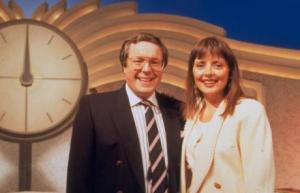
When I was small, my Mum loved the TV Show Countdown. We would watch it every day, and it would be recorded onto VHS in case we were out, or the phone rang, or something like that! Apparently I even learnt some of my letters and numbers from the programme!
Since 1996 the show has been on nearly every day, with no break between series, but before that, when we were dedicated viewers, it had breaks between series like most normal TV shows. This meant that the end of series was a bit more of a climax, you started a series with heats, went through quarters, semis and built up the the Grand Final, and this was something of an event in the Clewer household.
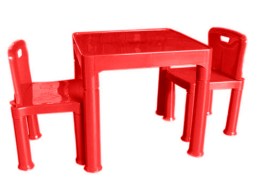
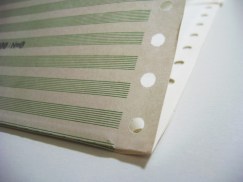
My brother and I had a little plastic table and chairs we would sit and, and then, because it was the final, we’d get out the big bits of old paper and we would try our hand at the words and numbers games! I don’t know if I ever got beyond a three letter word in those days, and even now I think I’d struggle to get beyond a five, and I don’t know that I ever managed the numbers game (though I love it now – in fact, I’ve even made my own excel spreadsheet to generate games of it!) but we really enjoyed it, it became an event, a tradition!
Do you mean to tell me you never did that? Was it really just us?! You’re missing out!
My mum leant me this book and said I should read it. Considering she’s the person that first got me into Cecelia Ahern to whom I am now completely addicted, I thought I’d give it a go.
The book is about three women: Gemma, Jojo and Lily. The first half of the book they each get a third of for us to learn about them, their backstory and where this book is heading for them. The three stories are a little linked – without giving too much away, Gemma and Lily used to know each other, Lily and Jojo will get to know each other, and Jojo will get to know Gemma later – but for the first two thirds of the book or so it really is like reading three different stories.
In some ways this was a bit tricky, because you could go a good sixty pages with one character, before moving to another one. Each character has her own history, her own set of colleagues, friends and family, all of which you’re expected to know by name quite quickly, so it’s quite a lot to take in. Once we get through the first major chunk with each girl, the pace picks up a bit, and we switch between the characters a little more often, and towards the end of the book you might only have two pages with one character before flipping to another. This of course is the point where you don’t want to put it down, and cliffhangers are used far more freely than earlier in the book!
Another peculiarity was that Gemma and Lily’s stories are told in the first person, while Jojo’s is in the third person. It was a bit odd the first time I went from Gemma to Jojo, because that change is more noticeable than you’d think!
All characters go through job stuff, relationship stuff and family stuff, so there’s a lot to keep abreast of, but if you can manage that, it was a good read. I think it was worth persevering through the three long introductions to reach the more interweaving stories later. The further on you get into the book, the more the characters get involved in each other’s stories, and get to know each other. I’d say give it a try!





 ineke.co.uk